
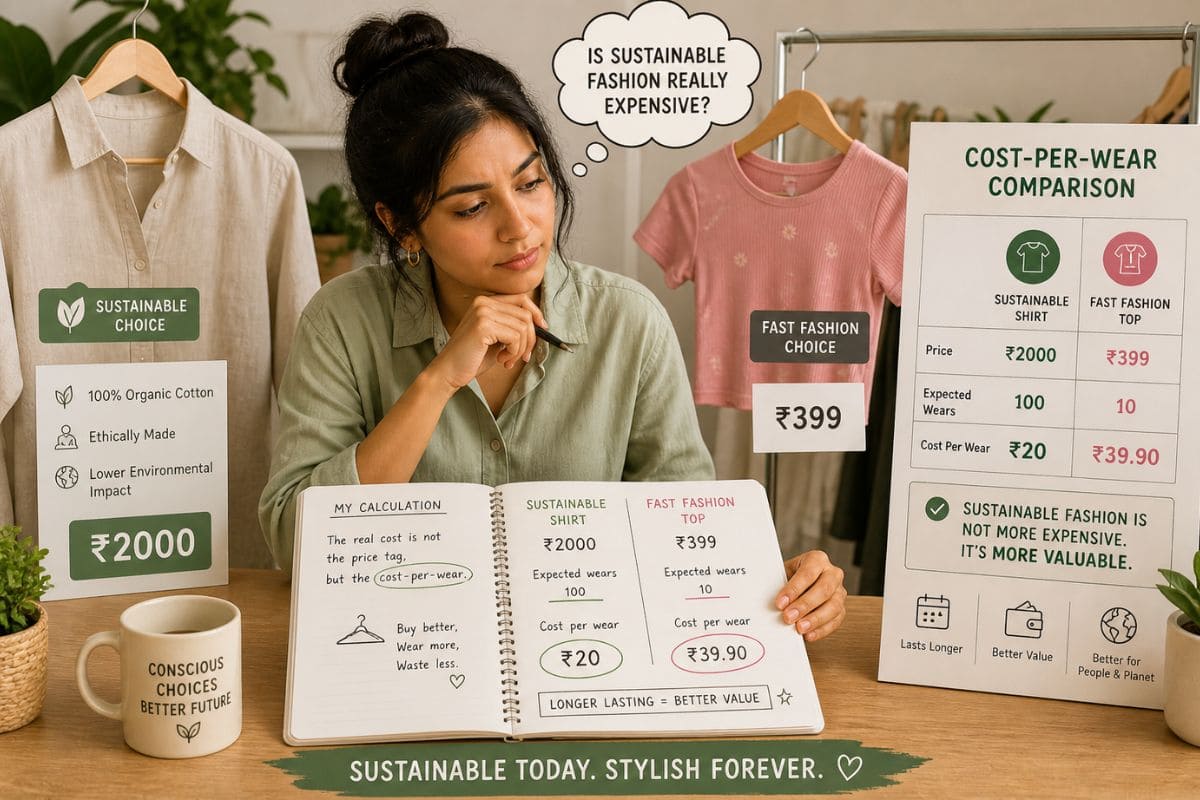
Is sustainable fashion expensive?
If you’ve ever opened a tab for an “eco-friendly” t-shirt, saw ₹2000 for a basic, and instantly went back to a ₹399 fast-fashion app—you’re not alone.
I used to think sustainable fashion was only for people with big budgets. It felt unrealistic, out of reach, and honestly frustrating.
But after slowly changing how I shop over the past few years, I discovered something surprising:
👉 Sustainable fashion isn’t about spending more—it’s about wasting less.
And when you do it right, it can actually save you money.
Let me walk you through my real experience, the honest math, and 13 shocking truths that will change how you see every price tag.
1. My Real Experience: What Actually Changed
I didn’t switch overnight.
At first, I :
- bought during sales
- followed trends blindly
- always chose the cheapest option
My wardrobe was full—but I still had nothing to wear.
👉 And I was constantly spending money.
The turning point
One day I checked my closet:
- I wore only 20–30% of my clothes regularly
- some items still had tags attached
- others were already faded or torn
That’s when it hit me:
👉 I wasn’t saving money—I was wasting it slowly.
What I changed
- re-wore outfits intentionally
- stopped impulse buying completely
- focused on versatile pieces that mix easily
Within months:
- my monthly spending dropped by nearly 40%
- my outfits actually looked better
- shopping stress disappeared
👉 Sustainable fashion is not a trend. It’s a system.
2. Is Sustainable Fashion Expensive?
Short answer:
Sustainable fashion feels expensive upfront, but it is usually cheaper over time because higher-quality clothes last longer and reduce how often you need to replace them.
Example:
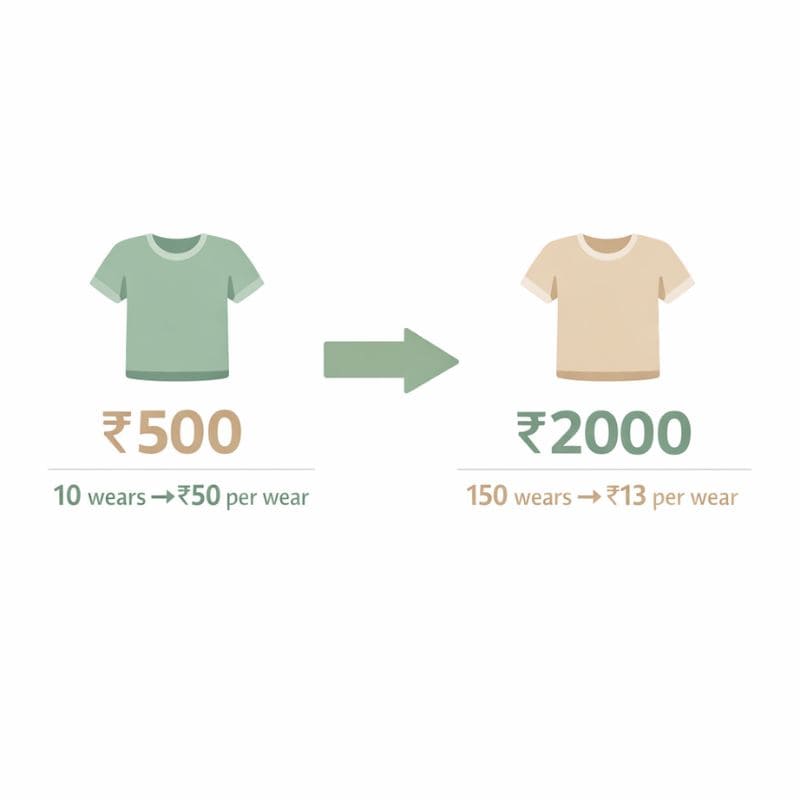
A ₹500 fast-fashion top worn 10 times = ₹50 per wear.
A ₹2000 sustainable top worn 150 times = ₹13 per wear.
👉 So is sustainable fashion expensive? Yes at checkout. No over time.
3. Is Sustainable Fashion Expensive? (Simple Explanation)
Let me break this down in plain language.
Is sustainable fashion expensive in terms of price tag? Sometimes yes. A good organic cotton shirt might cost ₹2000 while a fast-fashion shirt costs ₹500.
But here’s what most people miss:
Sustainable fashion costs more initially because quality clothing is priced honestly:
- fair wages for workers
- better materials that don’t fall apart
- smaller production runs (less waste)
But it becomes cheaper because:
- clothes last 3–5x longer
- you buy less often
- cost per wear is much lower
👉 That’s why it saves money long-term.
Let me repeat that:
Is sustainable fashion expensive? Expensive today, cheaper tomorrow.
4. The Psychology of “Cheap” vs. “Expensive”
Fast fashion trains us to think:
- cheap = smart
- expensive = waste
But cheap clothes are designed to fail:
- weak stitching that unravels
- poor fabric that pills or fades
- fast wear and tear after a few washes
👉 You keep replacing them. Every few months. Forever.
Sustainable fashion flips the model:
- buy less
- wear more
- replace less
Once you understand this, the answer to is sustainable fashion expensive becomes obvious: only if you refuse to change your habits.
5. Is Sustainable Fashion Expensive? The Cost Breakdown
Let’s put this side by side.
| Fast Fashion | Sustainable Approach | |
| Monthly spend | 3 tops × ₹500 = ₹1500 | 1 quality item = ₹1500–₹3000 |
| Yearly spend | ₹18,000 | ₹18,000–₹30,000 |
| Lifespan of item | 3–6 months | 2–5 years |
| Replacements needed | Frequent | Rare |
| Cost per wear | High (₹40–₹60) | Low (₹10–₹20) |
So is sustainable fashion expensive monthly? It can be similar or slightly higher.
But over 12 months?
You own fewer, better things. You throw away less. You shop less often.
👉 The costs balance over time, and then sustainable wins.
6. 5-Year Cost Comparison (Will Shock You)
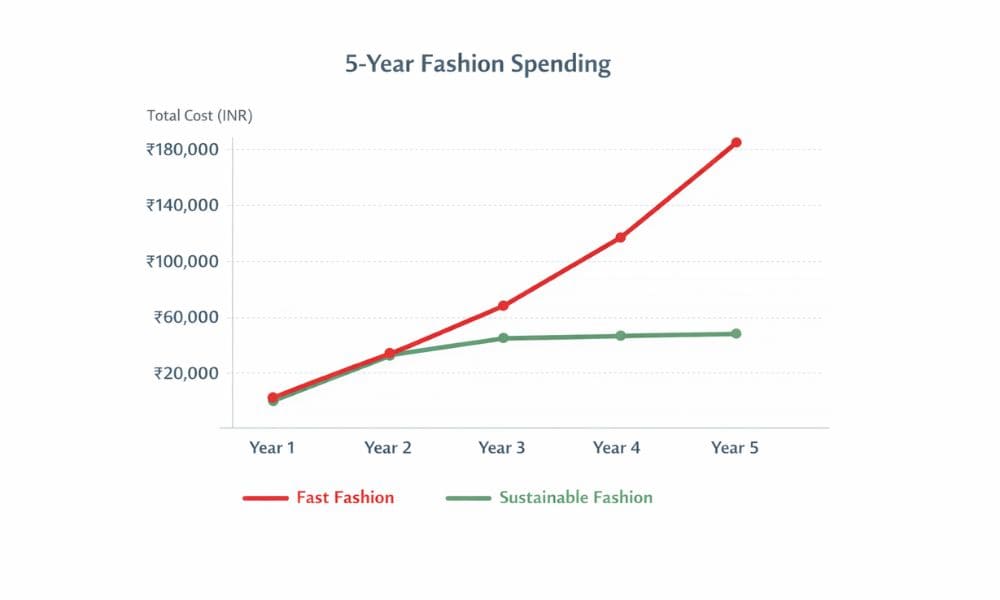
Let’s play the long game.
Fast fashion shopper:
₹30,000 per year (average)
Year 1: ₹30,000
Year 2: ₹30,000
Year 3: ₹30,000
Year 4: ₹35,000 (inflation)
Year 5: ₹35,000
Total: ₹160,000
Sustainable shopper:
Year 1: ₹20,000 (investment pieces)
Year 2: ₹5,000 (few replacements)
Year 3: ₹5,000
Year 4: ₹10,000 (one major item)
Year 5: ₹5,000
Total: ₹45,000
👉 You save ₹115,000 in 5 years.
And you own clothes that actually last.
So when someone asks is sustainable fashion expensive, show them this table.
7. Why Ethical Clothes Cost More (Real Reasons)
You need to understand where your money goes.
1. Fair wages
Fast fashion pays workers pennies. Ethical brands pay living wages. A ₹399 shirt often implies unfair labor.
2. Better materials
Natural fabrics (organic cotton, linen, wool) cost more to grow and process. According to the Textile Exchange, organic cotton uses 91% less blue water than conventional cotton.
3. Small production
H&M orders 2 million of one dress. A small sustainable brand orders 200. The factory charges the small brand much more per unit.
4. Transparency
Certifications like GOTS, Fair Trade, and B Corp cost brands money to verify. Platforms like Good On You help you know which brands are telling the truth.
👉 You’re not paying more for nothing. You’re paying for honesty.
8. Is Sustainable Fashion Expensive in the Long Term?
Let me ask you a different question.
Is sustainable fashion expensive if you keep shopping the same way you always have?
Yes. Absolutely.
If you buy 10 cheap items a month and try to replace them with 10 expensive sustainable items, you will go broke.
But that’s not how it works.
If you change your habits:
- buy less
- choose better
- wear longer
- repair instead of replace
👉 Then is sustainable fashion expensive? No. You spend less over time.
This is the part most influencers won’t tell you. They want you to buy their $100 organic t-shirt and keep buying new stuff every week.
Don’t fall for it.
9. How to Start Without Spending More Money
You don’t need a big budget to begin.
Start here (zero cost today):
- wear what you already own – seriously. Rediscover your closet.
- stop shopping for 30 days – a no-buy month resets your brain
- repair instead of replacing – sew that button, fix that hem
- restyle outfits – tuck, layer, roll sleeves – get creative
- swap or borrow – ask a friend with similar size
👉 Sustainable fashion starts with using—not buying.
For a complete roadmap, read our step-by-step guide to build a sustainable wardrobe.
10. 13 Ways to Save Money with Sustainable Fashion
Hack 1 – Cost-Per-Wear Thinking
How to apply it
Before you buy anything, divide the price by the number of times you will realistically wear it.
If the result is less than ₹30 (a cup of coffee), it’s a good deal. If it’s more than ₹400 (a movie ticket), think twice.
Example: ₹2000 jacket ÷ 100 wears = ₹20 per wear → buy it.
Hack 2 – 30-Day No-Buy Rule
How to apply it
Stop buying clothes for 30 days. No exceptions.
Use this time to:
- reorganize your closet
- find forgotten pieces
- break the impulse shopping habit
After 30 days, you’ll realize you didn’t need most of what you wanted to buy.
Hack 3 – Thrift First
How to apply it
Before buying anything new, check second-hand apps or local thrift stores.
Search for specific items (“black linen trousers size 30”). Filter by material (cotton, wool, linen). Avoid polyester.
Thrifting is the most sustainable and cheapest option. Learn more in our thrift store hacks guide.
Hack 4 – Check Fabrics
How to apply it
Always read the label.
- ✅ Good: 100% cotton, linen, wool, silk, Tencel, hemp
- ❌ Avoid: Polyester, nylon, acrylic, spandex (unless blended under 10%)
Natural fibers last longer. Synthetics shed microplastics and look worn after a few washes.
Hack 5 – One In, One Out
How to apply it
For every new item you bring in, remove one item from your wardrobe (donate, recycle, or sell).
This keeps your closet from overflowing and forces you to ask: “Is this new piece better than what I already have?”
Hack 6 – Off-Season Shopping
How to apply it
Buy winter coats in June. Buy linen dresses in January.
Sustainable brands still have clearance sales to make room for new stock. You can save 50–70% by shopping 3–4 months ahead of the season.
Hack 7 – Capsule Wardrobe
How to apply it
Limit your main wardrobe to 30–40 pieces (including shoes and outerwear).
Stick to a neutral color palette (black, white, beige, navy, denim). Every piece must match at least three others.
This reduces decision fatigue and spending. For a full guide, see our capsule wardrobe on a budget post.
Hack 8 – Repair Clothes
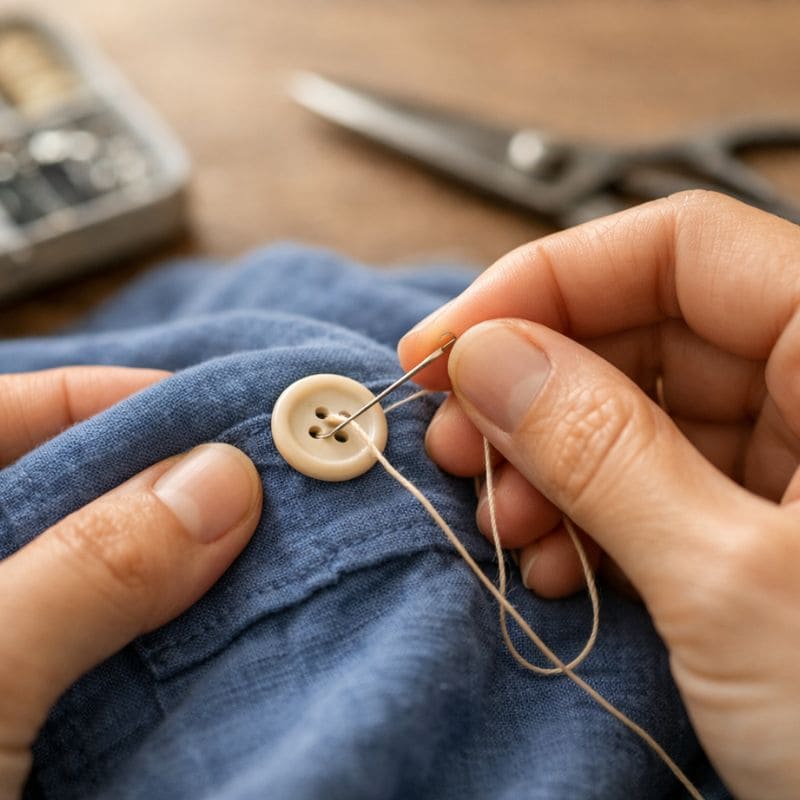
How to apply it
Learn three basic skills:
- sewing a button
- fixing a hem
- using a fabric shaver for pilling
A ₹100 thread kit saves you from buying a new ₹1500 shirt. Dye faded black jeans with ₹50 fabric dye. Repair is almost always cheaper than replace.
Hack 9 – Rent Occasion Wear
How to apply it
Need a wedding outfit, party dress, or event suit? Rent it.
Spending ₹10,000 on a dress you wear once is insane. Rental platforms offer the same for ₹1,500–₹2,000. This directly answers is sustainable fashion expensive for one-off events.
Hack 10 – Use Discounts
How to apply it
Never pay full price.
Many ethical brands offer:
- 10–20% student discounts
- first-time newsletter subscriber codes
- seasonal sales (Black Friday, end-of-season)
Email the brand and ask politely. Many will give you a code.
Hack 11 – Saved Searches
How to apply it
On second-hand apps (Poshmark, Depop, Vinted, Facebook Marketplace), save your searches.
Examples: “organic cotton jeans size 28” or “wool sweater black medium.”
When someone lists that item for cheap, you get a notification. Patience saves you 50–80%.
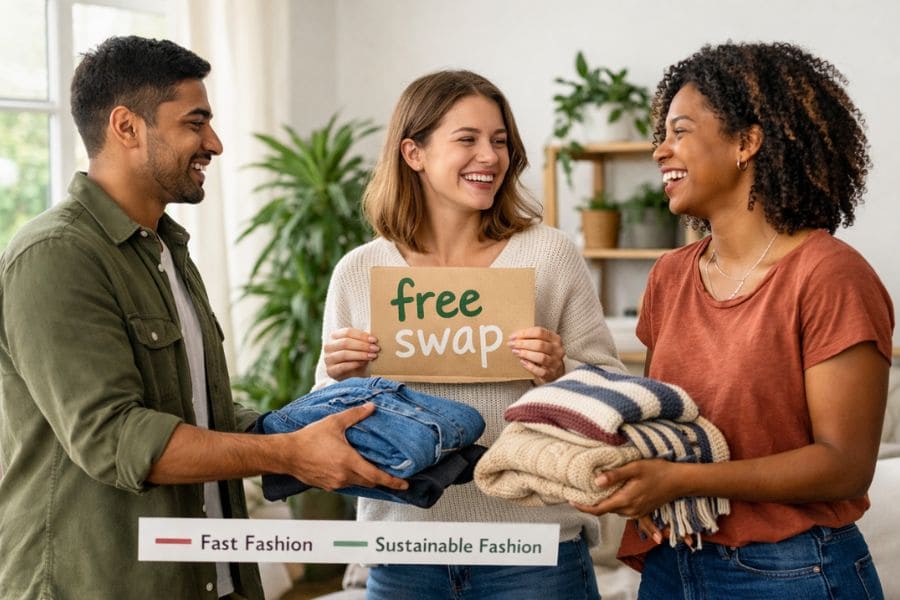
Hack 12 – Clothing Swaps
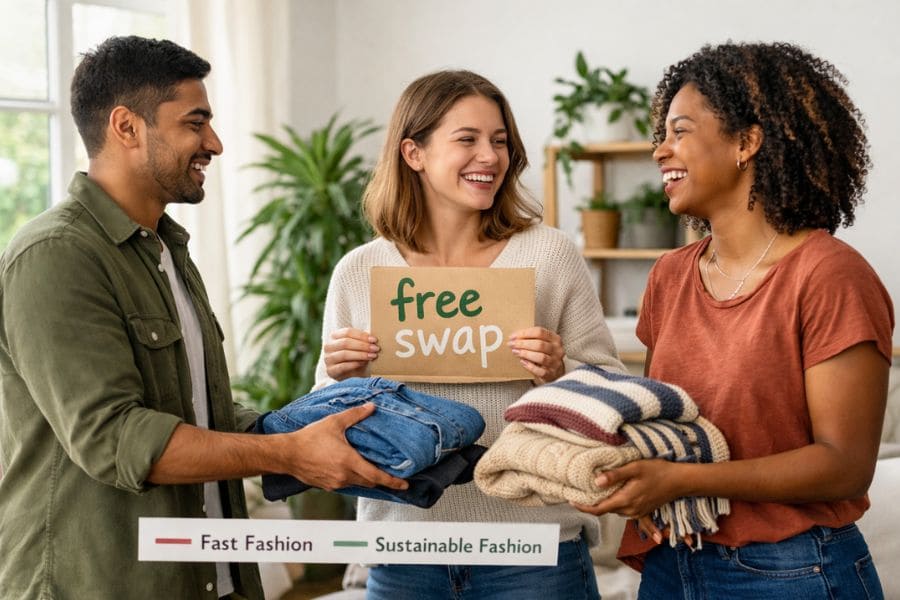
How to apply it
Invite 5–10 friends over. Everyone brings 5–10 items they no longer wear.
Swap for free. No money changes hands. You walk away with a refreshed wardrobe and zero spending.
It’s social, fun, and radically sustainable.
Hack 13 – Avoid Greenwashing
How to apply it
Just because a brand says “eco-friendly” or “sustainable” doesn’t mean you need the item.
Ask two questions:
- Will I wear this at least 30 times?
- Is the material mostly natural?
If the answer to either is no, walk away. Unwanted “sustainable” clothes are still waste. Learn to spot fake claims in our greenwashing guide.
11. What to Buy First (Beginner List)
If you’re starting from zero, don’t try to replace everything.
Focus on high-use items that touch your skin and get worn weekly:
- ✅ 2–3 basic t-shirts (organic cotton)
- ✅ 1 pair of good jeans or trousers
- ✅ 1 everyday shoe (leather or canvas that can be resoled)
- ✅ 1 layering piece (jacket, cardigan, or hoodie)
👉 These give you maximum value for your first ₹5000–₹7000.
12. What NOT to Buy (Money Wasters)
Avoid these at all costs if you want to save money:
- ❌ Trend pieces – they’ll be out of style in 3 months
- ❌ Duplicates – buying the same black t-shirt 5 times
- ❌ Impulse “eco” buys – just because it’s sustainable doesn’t mean you need it
- ❌ Occasion-only outfits – if you can’t wear it at least 10 times, rent it
13. Outfit Strategy That Saves Money Fast
You don’t need more clothes. You need better combinations.
Example outfit formula:
- 1 pair of jeans
- 3 different tops
- 1 jacket
👉 That’s 12 different outfits (3 tops × 2 ways each top × jacket on/off)
Another example:
- 1 black trousers
- 1 white shirt
- 1 sweater
- 1 blazer
👉 Over 16 outfits.
Is sustainable fashion expensive when you can create 16 outfits from 4 pieces? No. It’s the cheapest way to dress well.
14. Why Most People Fail (And How You Won’t)
Common mistakes beginners make:
- Trying to be perfect – You don’t need a 100% sustainable wardrobe overnight.
- Replacing everything – The most sustainable item is what you already own.
- Following influencers – Their lifestyle (and budget) is not yours.
- Ignoring current wardrobe – You probably already have good pieces.
How you won’t fail:
- Start with 2–3 changes
- Give yourself 6–12 months
- Measure success by cost per wear, not by how many “eco” tags you have
15. Weekly Habit That Saves Money
Do this every Sunday. Takes 10 minutes.
The 10-minute reset:
- Plan 5–7 outfits for the week using what you own
- Mix and match combinations you haven’t tried
- Track what you actually wear (notes app is fine)
After 4 weeks, you’ll see a pattern:
- You wear 20% of your clothes 80% of the time
- You can donate the rest
- You stop buying because you see abundance, not scarcity
👉 This habit alone cuts impulse buying by 70%.
16. Beginner Checklist
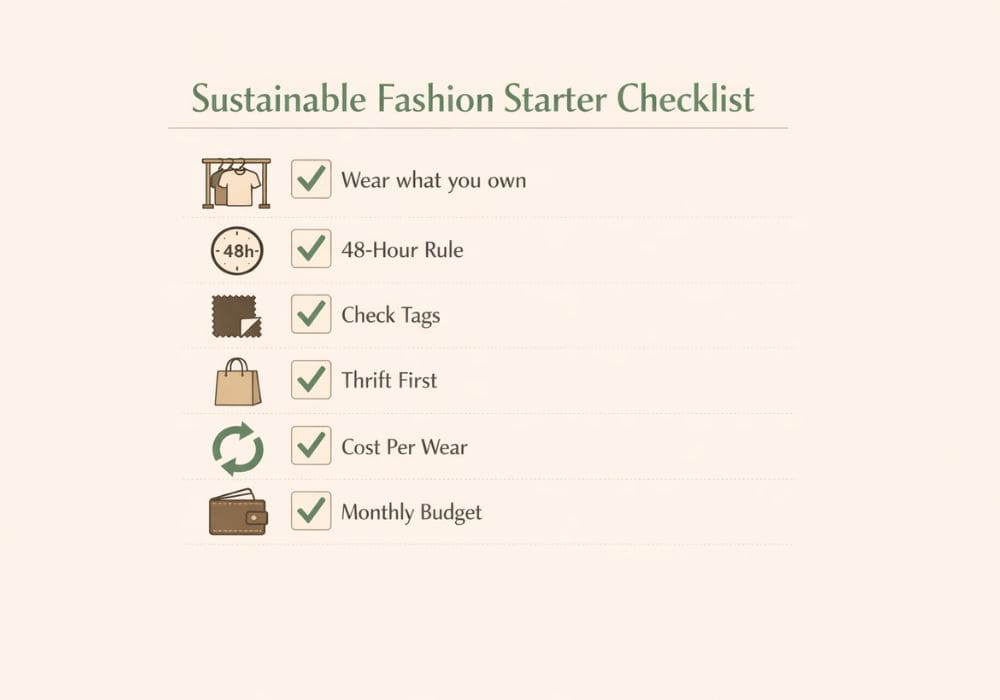
Print this. Stick it on your wall.
- I have worn what I already own for 2 weeks
- I have waited 48 hours before any purchase
- I have checked the fabric tag (no polyester)
- I have searched second-hand before buying new
- I have asked “does this match 3 items I own?”
- I have calculated cost per wear
- I have a monthly clothing budget (₹1500–₹3000)
Check at least 5 of these before asking is sustainable fashion expensive again.
FAQs
Q: Is sustainable fashion always expensive?
A: No. Thrifting, swapping, and repairing cost little to nothing. The most expensive option is buying cheap clothes repeatedly.
Q: Can I start with a budget of ₹1000 per month?
A: Yes. Use that ₹1000 for repairs, one second-hand 100% cotton shirt, or save it for 2–3 months to buy one quality piece. Do not buy two cheap polyester shirts instead.
Q: Is thrifting considered sustainable?
A: Yes. It’s one of the most sustainable and cheapest options. You’re extending the life of existing clothes.
Q: How do I avoid wasting money on “sustainable” marketing tricks?
A: Look for specific certifications (GOTS, Fair Trade, B Corp) and ignore vague words like “eco-friendly” or “green.” Read our greenwashing guide for details.
Q: Is sustainable fashion expensive for a student?
A: It can be if you buy new. Focus on repairs, thrifting, clothing swaps with friends, and saving for one quality item every 2–3 months.
Q: What’s the #1 money-saving rule?
A: Cost per wear. Always calculate it before buying. A ₹5000 coat worn 500 times (₹10 per wear) is cheaper than a ₹1000 jacket worn 10 times (₹100 per wear).
18. Final Verdict + Where to Go Next
So—is sustainable fashion expensive?
👉 At the start, yes.
👉 Over time, no.
👉 If you shop mindlessly, yes.
👉 If you shop with intention, no.
But the real truth is bigger than money:
It’s not about spending more. It’s about spending smarter.
You don’t need a perfect wardrobe tomorrow. You don’t need to throw away everything you own. You don’t need to feel guilty.
You just need to start:
- One repair instead of one replacement
- One thrifted find instead of one fast-fashion haul
- One week of restyling instead of one impulse buy
That’s how real change happens.
👉 Where to Go Next
Ready to take action? Here’s your roadmap:
- Start here: Build a sustainable wardrobe step-by-step
- Save money now: Thrift store hacks that actually work
- Avoid getting scammed: Fashion greenwashing – how to spot fake “eco” brands
- Understand the basics: What sustainable fashion really means
Start small. Stay consistent. That’s what works.
Now go look in your closet. You already have something to wear.