
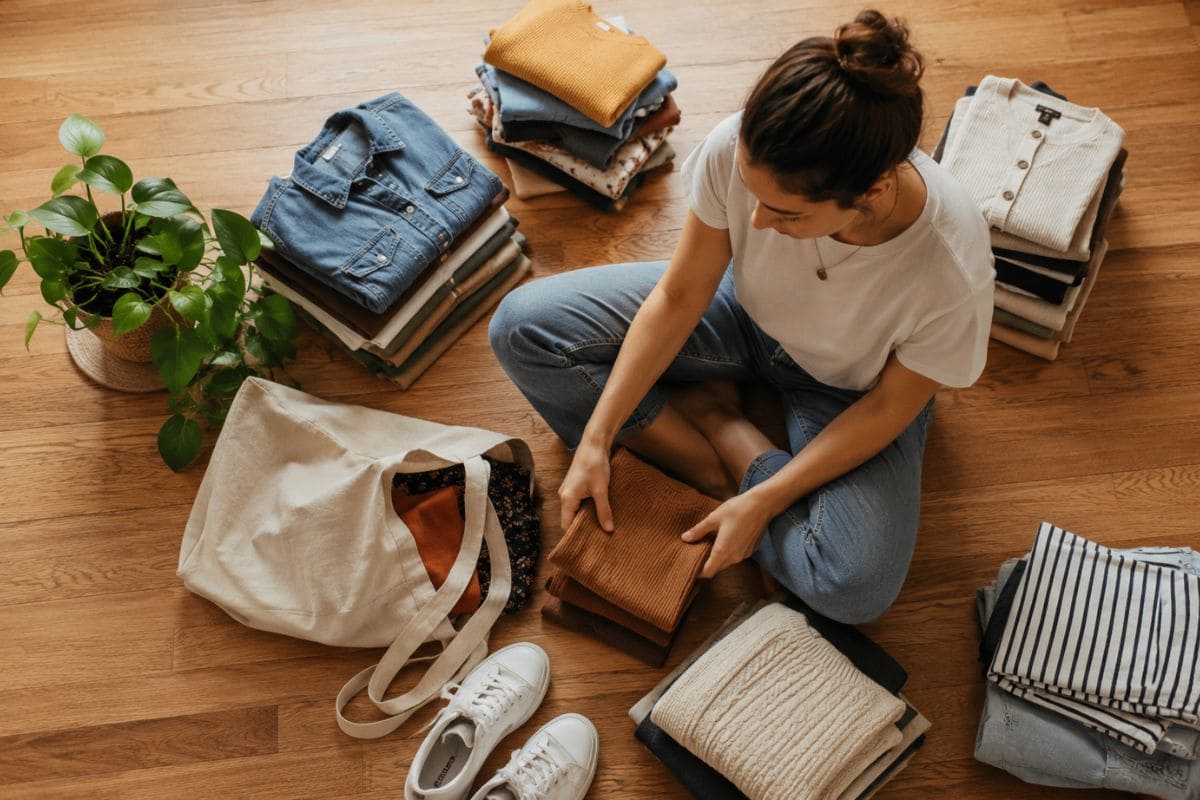
You want to dress better, waste less, and stop feeding the fast‑fashion machine. But every time you search for how to start a sustainable wardrobe on a budget, you’re met with 98 organic cotton t‑shirts and 250 “ethically made” jeans. It feels like sustainable fashion is only for the rich.
That’s a lie.
I’ve been exactly where you are. Three years ago, my closet was a graveyard of cheap fast fashion that fell apart after two washes. I was broke, overwhelmed, and convinced that how to start a sustainable wardrobe on a budget was impossible for someone like me.
Turns out, I was wrong. The most sustainable wardrobe is often the cheapest one – built on clothes you already own, secondhand finds, and a few simple habits that save both money and the planet.
In this guide, I’ll walk you through seven realistic, no‑shame steps to answer once and for all: how to start a sustainable wardrobe on a budget. No perfectionism. No $200 sweatshirts. Just real strategies that work on a real budget.
Let’s dive in.
Why “How to Start a Sustainable Wardrobe on a Budget” Isn’t an Oxymoron
Let’s kill the biggest myth first: sustainable fashion does not have to be expensive. When you truly understand how to start a sustainable wardrobe on a budget, you realize that the cheapest option is often the most sustainable one.
Think about the numbers. The average American buys 68 new garments per year, according to data from Earth.org. Most of those are fast fashion pieces that cost around 15 each. That’s over 1,000 a year on clothes that often disintegrate within months.
Now compare that to a budget‑sustainable approach:
- Buy 10 secondhand items per year at an average of 10 each→$100
- Repair what you already own → $5 in thread and patches
- Swap or borrow 5 items per year → $0
- Total annual spend: around $105
You’re not just saving the planet – you’re saving nearly $900 a year. That’s the power of learning how to start a sustainable wardrobe on a budget.
I remember the exact moment it clicked for me. I was staring at a pile of ripped jeans and faded t‑shirts, feeling guilty. Then I realized: I didn’t need to buy anything new. I needed a different mindset. Once I understood how to start a sustainable wardrobe on a budget, everything changed. My closet got smaller but more wearable. My bank account thanked me.
So if you’re ready, let’s get into the seven steps that will transform your wardrobe without breaking the bank.
Step 1: Audit Your Current Closet (Free & Eye‑Opening)
The first and most important part of how to start a sustainable wardrobe on a budget costs absolutely nothing. You just need an afternoon and your current closet.
How to Do a Real Closet Audit
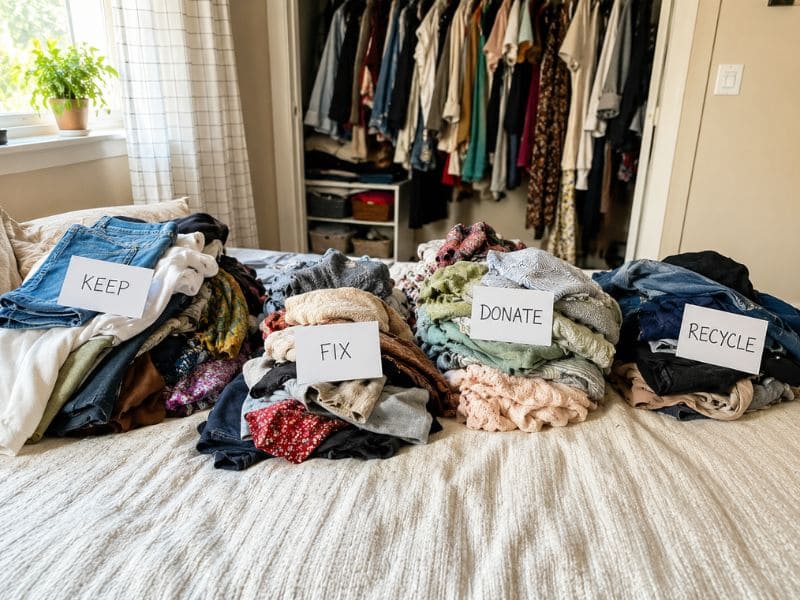
Take everything out. Yes, everything. Pile it on your bed. Then sort into four categories:
| Pile | What It Means | Action |
| Love & Wear | Fits well, feels good, worn in last 3 months | Keep, note what you’re missing |
| Fixable | Slight tear, missing button, loose hem | Set aside for repair (Step 3) |
| Donate/Sell | Good condition but not your style/size | Donate, sell on Poshmark/Depop, or give to a friend |
| Recycle | Stained, torn beyond repair, worn out | Textile recycling (H&M, North Face, or local drop‑off) |
When I did my first audit, I discovered I owned 14 black t‑shirts. Fourteen. I wore maybe two of them regularly. That’s when I truly understood how to start a sustainable wardrobe on a budget – I already had more than I needed
What I Found in My First Audit
I owned 14 black t‑shirts. Fourteen. I wore maybe two of them regularly. The rest were faded, pilled, or just… there. I also found three identical cardigans I’d forgotten about.
That’s the power of an audit. You realize you already have more than you need.
Create Your “Wardrobe Gap” List
After you’ve kept your loves and set aside fixables, ask yourself: What do I actually need?
Not “I want a trendy new top.” But:
- I don’t have a warm winter coat.
- I have no comfortable pants for working from home.
- I need one pair of black shoes that go with everything.
Write down those gaps. That becomes your shopping list – and it will save you from impulse buys. This single habit is the foundation of how to start a sustainable wardrobe on a budget. You stop buying random stuff and start buying what you truly need.
If you’re still unsure what “sustainable fashion” really means, read our guide: What Does Sustainable Fashion Mean? A Honest Guide to Dressing Better (2026). It’s the perfect companion to this step.
Step 2: Master the Art of Thrifting & Secondhand Shopping
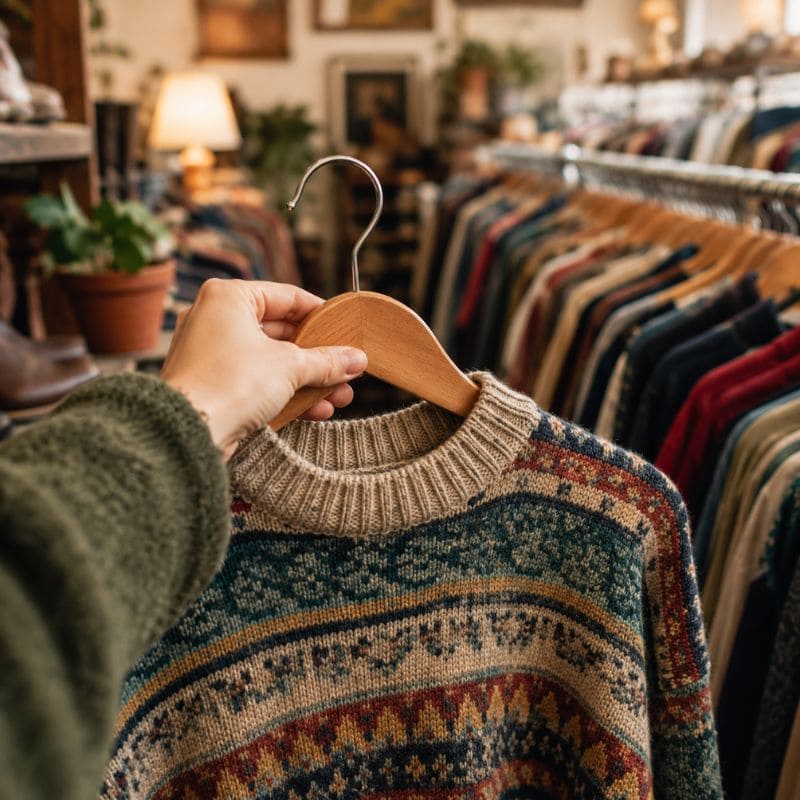
Once you know what you need, the next part of how to start a sustainable wardrobe on a budget is learning to shop secondhand. Thrifting is the single most powerful tool for saving money and reducing waste.
Secondhand clothes are typically 80‑95% cheaper than new. Plus, you’re keeping textiles out of landfills. But thrifting can be overwhelming if you don’t have a system.
The 4‑Hour Thrift Method
Here’s exactly how I shop, refined over three years of practice – all while focusing on how to start a sustainable wardrobe on a budget:
- Hour 1 – Scan & Touch. Walk every aisle. Touch fabrics. Only pull items that feel good (cotton, linen, wool, silk – avoid cheap poly blends that pill).
- Hour 2 – Try On Aggressively. Try everything you pulled. Be ruthless. If it doesn’t fit perfectly, put it back. Do not buy “almost fits.”
- Hour 3 – Quality Check. Check seams, zippers, armpit stains, crotch wear. Hold it up to light – see holes? Put it back.
- Hour 4 – Buy & Leave. Buy only what’s on your gap list + one “wildcard” if you truly love it.
Best Thrifting Days & Stores
| Store | Best Day | Pro Tip |
| Goodwill | Monday morning | New weekly stock goes out Sunday night |
| Salvation Army | Wednesday | Senior discount days (often 50% off) |
| Local thrift stores | First Saturday of month | Fill‑a‑bag sales (5‑5‑10) |
| Poshmark/Depop | Any day | Search for “lot” or “bundle” to save shipping |
How to Spot High‑Quality Fabrics Secondhand
Learning to read tags is a skill that pays off forever. When you’re learning how to start a sustainable wardrobe on a budget, fabric quality matters more than brand names.
- Good: 100% cotton, linen, hemp, Tencel, wool, cashmere, silk. If you want to dive deeper, The Good Trade’s guide to choosing sustainable fabrics breaks down exactly why these fibers are better for you and the planet.
- Avoid: Polyester, acrylic, nylon, spandex (unless <5% for stretch)
Real Example: My Best Thrift Haul
Last winter, I needed a warm wool coat. New ethical wool coats cost 200‑400. I found a 100% wool, made‑in‑USA coat at Goodwill for 12. It needed a dry cleaning (15) and one button replaced (0.50). Total: 27.50. That’s the magic of how to start a sustainable wardrobe on a budget.
And if you’re wondering how to turn your own unwanted clothes into cash to fuel more thrift finds, check out our detailed guide on Where to Sell Used Clothes for Cash Online it covers the best platforms and exactly how to price your items.
Step 3: Learn 3 Basic Clothing Repairs (Save Hundreds)
When a button falls off or a seam rips, most people toss the garment. That’s like throwing away a car because a tire is flat. Learning three simple repairs will save you hundreds of dollars a year – and it’s easier than you think.
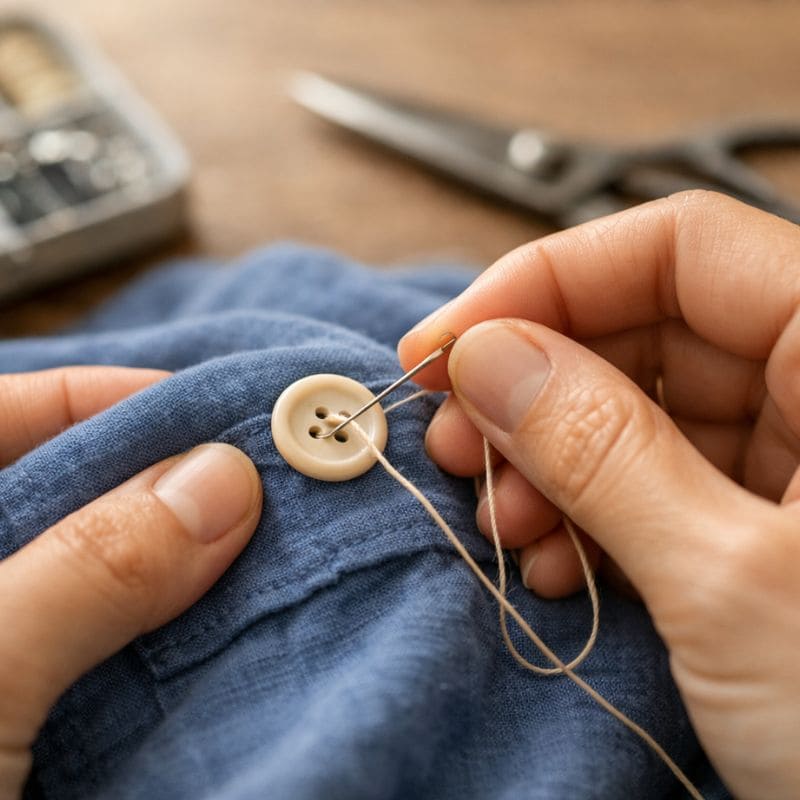
Repair #1 – Sewing a Button
You don’t need a sewing machine. Just a needle and thread.
Steps (30 seconds to learn):
- Thread needle, double the thread, tie a knot.
- Push needle up through fabric, then through one hole of the button.
- Down through the opposite hole, back up through the next, etc.
- Repeat 4‑5 times, then wrap thread around the base of the button to create a small “shank.”
- Knot and cut.
Repair #2 – Fixing a Small Tear (Ladder Stitch)
For rips on seams or thin fabric.
- Watch a 2‑minute YouTube video (search “ladder stitch invisible repair”).
- Practice on an old sock first.
- Takes 5 minutes. Saves a $40 shirt.
Repair #3 – Patching Holes (Visible or Invisible)
Invisible patch: Use iron‑on mending tape on the inside.
- Invisible patch: Use iron‑on mending tape on the inside
- Visible patch (cool & trendy): Use a contrasting fabric and do a simple whip stitch around the hole. This is big in sustainable fashion circles – it’s called “visible mending.” If you’re ready to try it, The Spruce Crafts has a whole collection of creative ways to fix torn clothing with embroidery that’s perfect for beginners.
Where to Get Tools for Almost Free
- Needles & thread: Dollar Tree ($1.25)
- Iron‑on patches: Amazon or thrift stores (often 10 for $1)
- Scissors: Use small nail scissors you already own
I promise you – if you can tie your shoes, you can sew a button. And learning this skill is a massive step in how to start a sustainable wardrobe on a budget because you stop being afraid of “broken” clothes.
Step 4: The “One In, One Out” Rule That Changes Everything
This is the behavioral cheat code of sustainable wardrobes.
The rule: For every new piece of clothing that enters your home, one old piece must leave (donate, sell, or recycle).
Why does this work?
- Stops hoarding. You can’t accumulate 100 t‑shirts if you have to remove one each time.
- Increases intentionality. Before you buy, you ask: “Am I willing to give up something I already own for this?”
- Keeps your wardrobe fresh. You’re constantly curating, not just collecting.
How to Apply It When You’re on a Budget
Let’s say you find an amazing $8 thrift sweater. You love it. But you have to remove one item. Go home, pick something you haven’t worn in 6 months, and donate it immediately. Now your wardrobe has one better item and one less piece of clutter.
When I first started learning how to start a sustainable wardrobe on a budget, I had about 120 clothing items. After one year of one‑in‑one‑out, I was down to 85 items. My wardrobe was smaller but way more wearable. I saved money because I stopped buying random $5 tank tops just because they were cheap.
This one rule alone transformed how to start a sustainable wardrobe on a budget for me. Try it for 30 days. You’ll be shocked at how much it changes your habits.
Step 5: How to Wash Clothes Less (And Correctly)
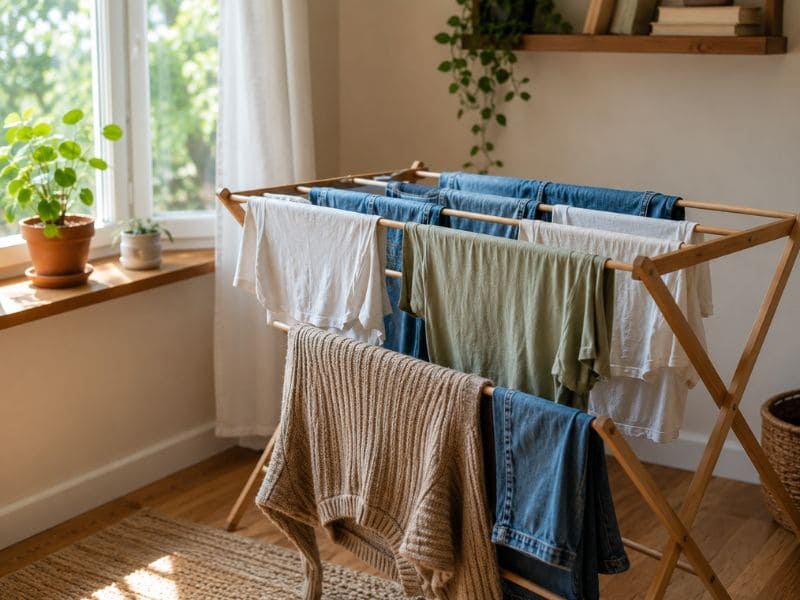
Here’s a fact that surprised me: the average garment’s carbon footprint comes 70% from washing and drying, not from production. Washing less is one of the easiest, free ways to be sustainable and save money. And yes, it’s part of how to start a sustainable wardrobe on a budget because you’ll replace clothes less often.
The New Washing Rules
| Clothing Type | How Often (Really) |
| Jeans | Every 10‑15 wears (unless visibly dirty) |
| Sweaters (wool/cotton) | Every 5‑7 wears – air out between |
| T‑shirts (undershirts) | After 2‑3 wears |
| Bras | Every 5‑7 wears (rotate two) |
| Outerwear (jackets) | Once per season (spot clean as needed) |
| Socks & underwear | After every wear (non‑negotiable) |
How to Wash Correctly (Save Clothes & Energy)
- Cold water only. Hot water fades colors and damages fibers. Cold cleans just as well for most loads.
- Air dry. Dryers shred elastic and shrink wool for wool specifically, see our guide on How to Care for Wool Sweaters Without Dry Cleaning. Use a $10 folding drying rack. Your clothes will last 2‑3x longer.
- Use a microfiber filter (for synthetics). If you own polyester or nylon, a Guppyfriend bag or washing machine filter catches microplastics before they go to the ocean.
The Money Savings of Washing Less
- Each dryer load costs ~0.50 in electricity. Airdrying3loadsaweeksaves78/year.
- Clothes lasting 2x longer means you replace half as often. On a 500/year clothing budget, that’s 250 saved annually.
That’s real money. And it’s all part of how to start a sustainable wardrobe on a budget.
Step 6: Swap, Borrow & Rent – The Social Sustainability Hack
Why own something you’ll wear once? This is the missing piece of how to start a sustainable wardrobe on a budget—community.
Clothing Swaps – Free & Fun
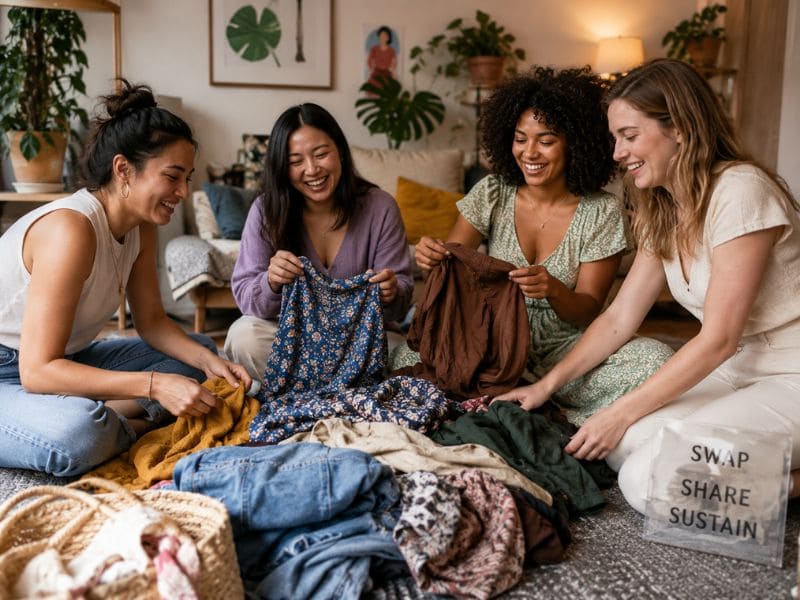
Organize a swap with 5‑10 friends. Rules:
- Everyone brings 5‑15 clean, good‑condition items they no longer wear.
- Lay everything out.
- Take whatever you want (no limits, within reason).
- Leftovers go to donation.
I hosted a swap last spring. I brought 12 items, left with 9 new‑to‑me pieces. Net spend: $0. And we had wine and snacks. This is how you build a sustainable wardrobe without spending a dime.
Borrowing for Special Occasions
Need a formal dress for a wedding? Before buying, ask:
- A friend with a similar size
- Local “library of things” (some cities have clothing libraries)
- Rent the Runway (one rental costs less than a new fast‑fashion dress)
Bartering with Neighbors
Check out Buy Nothing – a global network of neighbors giving away free clothes. It’s a legit nonprofit, not a spam site. Join your local Facebook group and you’ll find everything from winter coats to children’s shoes, all free.
This step alone can save you hundreds of dollars a year. And it’s one of the most fun parts of how to start a sustainable wardrobe on a budget.
Step 7: Buy New Only When Necessary – And Where to Spend
After you’ve audited, thrifted, repaired, swapped, and washed carefully, you’ll find there are still some items you need to buy new. That’s fine. The key is knowing where to spend a bit more and where to stay cheap.
What to Buy New (Splurge on These)
| Item | Why New | Budget Sustainable Option |
| Underwear & socks | Hygiene, elastic degrades | Pact, Boody (organic cotton, ~10‑10‑15) |
| Sneakers (daily wear) | Cushioning breaks down secondhand | Thrift first, but new for foot health |
| Winter boots | Previous owner’s wear pattern can hurt your feet | REI Used Gear (good middle ground) |
| Rain jacket | Waterproof coatings fail over time | Patagonia Worn Wear (certified used) |
Where to Use Thrifted for Almost Everything Else
- Jeans (broken‑in is better)
- T‑shirts (vintage cotton is thicker)
- Blazers & sweaters (thrift stores are full of high‑quality wool)
- Bags & belts (leather goods secondhand last forever)
The $50‑Per‑Year Rule
I limit myself to $50 total per year on new clothing purchases. That money goes to socks, underwear, or a rare replacement for a worn‑out essential. Everything else comes from thrift, swaps, or free groups.
This budget forces creativity. And that’s the real secret of how to start a sustainable wardrobe on a budget – constraints make you better, not poorer.
Frequently Asked Questions
A: Expect 3‑6 months of active thrifting, repairing, and swapping. Don’t rush it. The journey is part of the learning.Q: What if I live in a small town with bad thrift stores?
A: Use Poshmark, Depop, or eBay. Filter by “used” and “lot” to save on shipping. Also, try Facebook Marketplace for local pickups.Q: Can men use this guide?
A: Absolutely. The principles are gender‑neutral. Men’s thrifting is actually easier—good quality suits, work shirts, and boots are plentiful.Q: How do I deal with family/friends who judge thrifted clothes?
A: Show them your total spend vs. theirs. And honestly? Most people won’t even notice. “Thrifted” doesn’t mean “shabby.” It means character.
Your 30‑Day Action Plan to Start a Sustainable Wardrobe on a Budget
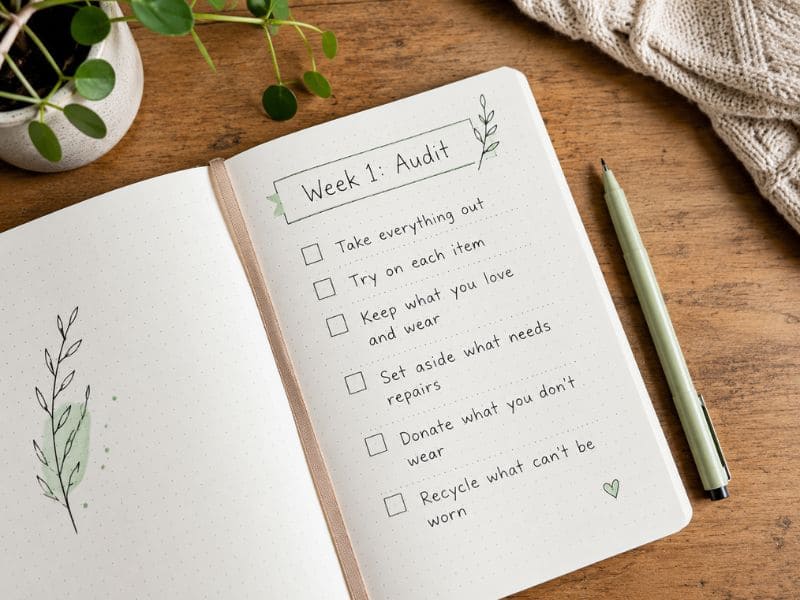
Here’s your no‑excuses, step‑by‑step plan. Follow it, and you’ll master how to start a sustainable wardrobe on a budget in just one month.
Week 1: Audit & Repair
- Pull everything out of your closet
- Sort into Love, Fix, Donate/Sell, Recycle
- Gather any fixable items and watch one YouTube repair video
- Take donations/recycling to drop‑off points
Week 2: Thrift & Swap
- Make your “gap list” based on what’s missing after the audit
- Visit one thrift store using the 4‑Hour Method
- OR organize a swap with 3+ friends
Week 3: Wash & Care
- Switch all laundry to cold water
- Buy a $10 drying rack and air dry everything for one week
- Identify 3 items you were washing too often (e.g., jeans, sweaters)
Week 4: The One‑In‑One‑Out Challenge
- For 7 days, apply OIOO to any clothing that comes in
- Track how many times you almost bought something but decided not to
- Celebrate every “no”
Ongoing (every season):
- Re‑audit once every 3 months
- Switch seasonal items (store winter wool in summer to protect from moths)
- Host or attend one swap per season
Final Thought: Perfection Is the Enemy of Progress
Here’s what I wish someone told me when I started learning how to start a sustainable wardrobe on a budget:
You don’t have to be perfect. You just have to be better than you were last month.
Did you buy a polyester shirt from H&M because you needed something for an interview? That’s fine. You’re still thrifting 80% of your clothes. You’re still repairing instead of tossing. You’re still washing on cold and air drying.
The fashion industry wants you to think that if you’re not 100% perfect, you’re a failure. That’s a lie.
The most sustainable wardrobe is the one you actually wear. The budget sustainable wardrobe is the one you can actually afford.
Start with Step 1 today. Just the audit. That’s it. Then tomorrow, do Step 2. One week from now, you’ll already be ahead of 90% of people.
You’ve got this. Now go open that closet door.