
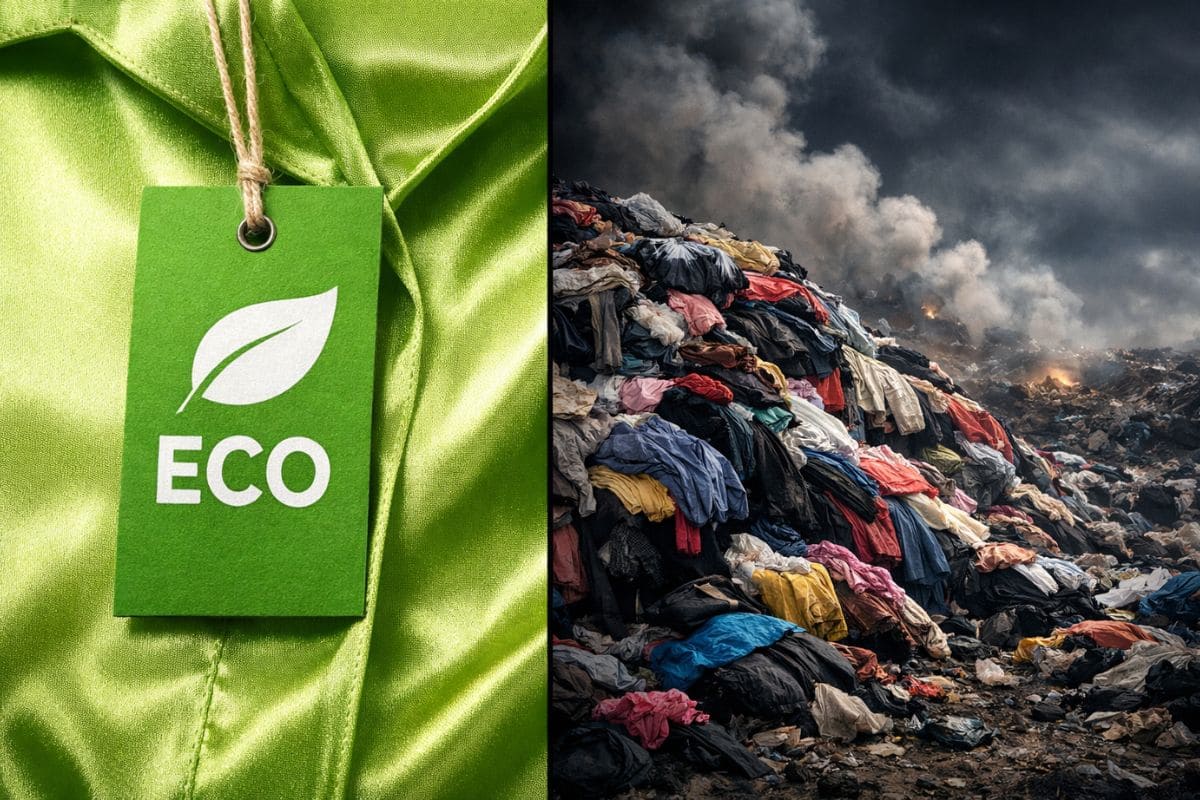
This article exposes the truth about fashion greenwashing—a deceptive practice that has reached epidemic proportions in 2026. Understanding fashion greenwashing is the first step to becoming an informed consumer who can’t be fooled by fake eco-labels. Let’s be honest for a moment. You care about the planet. You recycle your plastic. You carry a reusable water bottle. And when you shop for clothes, you actively look for the brands that seem to care too.
You see the little green tags. You read the words “conscious,” “sustainable,” and “eco-friendly.” You feel a little rush of satisfaction. Finally, you think, you can look good and feel good at the same time. You can buy that new sweater without the guilt.
But what if the guilt is the only thing that’s real?
What if every time you reach for that “green” product, you are actually falling for one of the most sophisticated marketing traps of the 21st century? This isn’t about a few bad apples. This is about an entire industry that has learned to weaponize your good intentions against you.
The phenomenon is called fashion greenwashing, and it is everywhere. It is on the websites you browse, the stores you visit, and the Instagram ads you scroll past. It is a multi-billion-dollar deception designed to make you feel like a hero while you continue to participate in a system that is actively destroying the planet.
And the worst part? No one talks about it because it would ruin the fairy tale. Today, we are tearing the curtain down.
The Inconvenient Truth About ‘Sustainable’ Fashion and Fashion Greenwashing
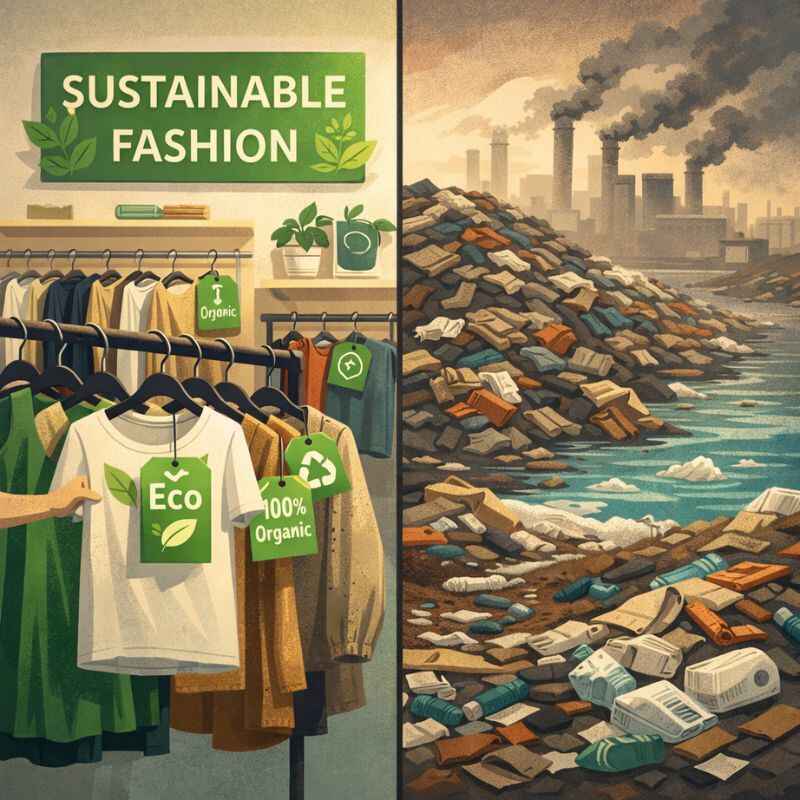
Before we dive into the tricks and the lies, we need to address the elephant in the room. Can the fashion industry, as it currently operates, ever be truly sustainable?
The answer, for most major brands, is no.
The business model of the modern fashion industry—particularly the fast fashion sector—is built on volume. They need you to buy fifty items a year instead of five. They need you to view clothing as disposable, as something to be worn once for an Instagram photo and then discarded. This model generates profit, but it generates waste, carbon emissions, and human suffering in equal measure.
When a brand that churns out thousands of new styles every single week slaps a “green” label on one small collection, it does not negate the environmental havoc of the other 99% of their products.
This is the foundation of fashion greenwashing. It allows companies to continue business as usual—overproduction, pollution, and exploitation—while using a tiny, “eco-conscious” capsule collection to clean up their public image. It’s the equivalent of a cigarette company selling one pack of organic tobacco and rebranding itself as a health organization.
The Language of Deception in Fashion Greenwashing
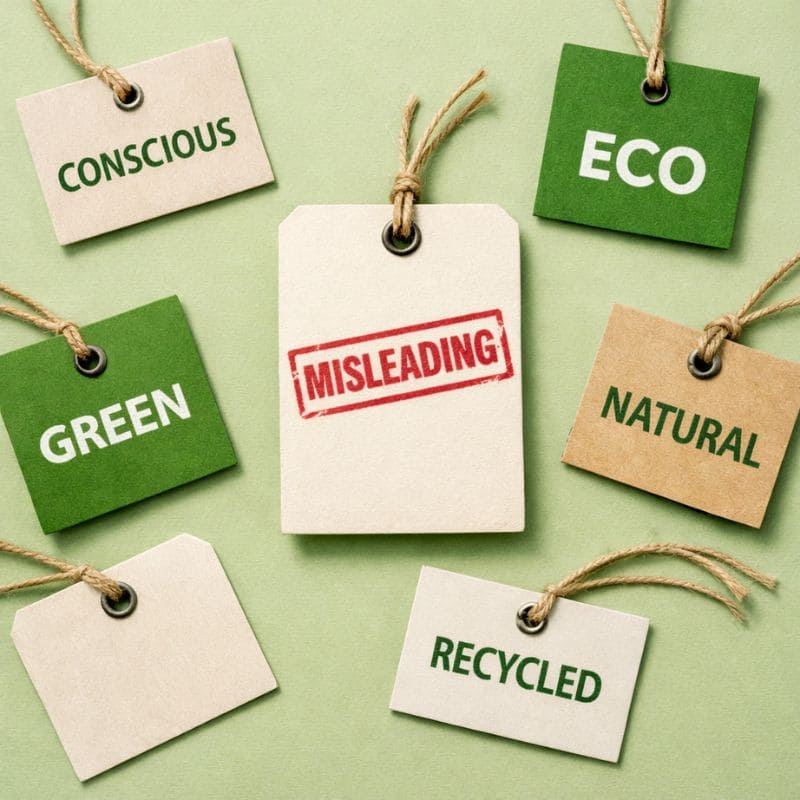
Brands know that you want to do good. They spend millions of dollars on market research to understand exactly what words will make you open your wallet. They have crafted a lexicon of deception—words that sound scientific and virtuous but are legally meaningless.
If you see these terms on a tag without a third-party certification to back them up, you are almost certainly looking at fashion greenwashing in action.
“Conscious” and “Eco”
Perhaps the most abused term in the industry is “conscious.” H&M’s “Conscious” line has been the subject of scrutiny for years. Consumers have paid a premium for these items, trusting that they were making a responsible choice, only to discover the “sustainable materials” in these garments often made up barely half of the product.
The word “conscious” describes a feeling, not a fact. It is designed to make you feel aware and virtuous. It tells you nothing about where the cotton was grown, how the worker was treated, or where the garment will end up in ten years.
“Green” and “Recycled”
Here’s a hard truth: recycled plastic is still plastic. Just because a shirt contains recycled polyester doesn’t mean it’s good for the environment. That recycled material might come from plastic bottles—which is better than using virgin petroleum—but every time you wash that shirt, it sheds microplastic fibers into the water supply. Those fibers end up in the ocean, in the fish, and eventually, back on your plate.
Furthermore, that “recycled” shirt was likely produced in a factory powered by coal, dyed with toxic chemicals, shipped halfway around the world, and packed in virgin plastic. The word “recycled” describes one tiny component of the garment’s life, but fashion greenwashing makes you think it describes the whole.
“Carbon Neutral”
This is one of the trickiest terms in the greenwashing playbook. In 2025, we saw legal action against giants like Lufthansa and Adidas, specifically regarding claims of climate neutrality.
When a brand claims a t-shirt is “carbon neutral,” they are usually relying on carbon offsets. This means they pay someone else to plant trees or build a wind farm to “balance out” the emissions they created making your shirt. In theory, it sounds reasonable. In practice, it is often a fantasy.
Trees take decades to grow to maturity. The emissions from your t-shirt happened yesterday. Furthermore, the quality of carbon offsets varies wildly. Some are legitimate; many are scams. As we saw in the Adidas case, courts are increasingly skeptical of brands that claim to be “climate neutral by 2050” without concrete, measurable plans to get there.
The Visual Trickery: How Colors and Logos Manipulate You
You are a mammal. You are hardwired to respond to visual cues. Brands know this better than they know their own supply chains.
Green is the color of nature. It is the color of health, of safety, of money. When you see a green logo or a green “sustainability” flag next to a product, your brain releases a little squirt of dopamine. You feel a sense of relief, of accomplishment. You have made the “right” choice.
This is not an accident. This is design psychology being weaponized for profit.
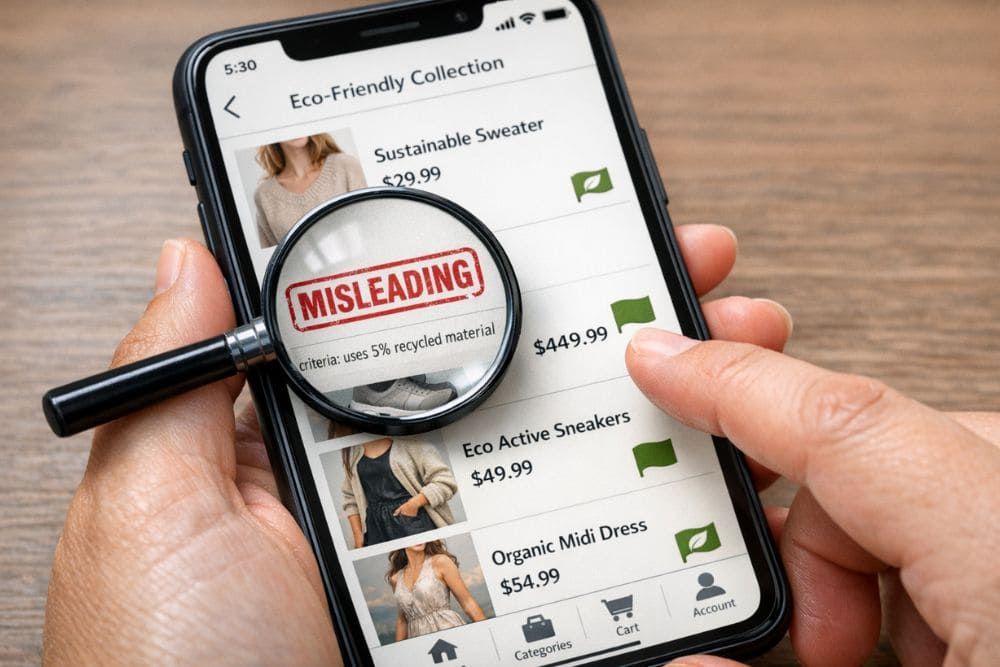
Researcher Tanja Gotthardsen, who has taken on major platforms like Zalando and Copenhagen Fashion Week, highlighted this exact issue. When Zalando placed a green “sustainability” flag on 25,000 products across its site, it created a powerful illusion of virtue. Consumers saw the flag and assumed the item was “good.”
But the criteria for getting that flag were so broad and varied from brand to brand that the flag was essentially meaningless. One product might have the flag because it is made of organic cotton. Another might have it because the factory used slightly less water. The consumer saw the same green flag and assumed both were equally sustainable.
This is visual fashion greenwashing at its finest: using design to bypass your critical thinking and appeal directly to your emotions. The German Environment Agency (Umweltbundesamt) confirmed that Zalando’s green banners constituted “unauthorised claims of unrestricted environmental benefits” and forced their removal.
The 2025 Scandal You Probably Missed: Nike, Lacoste, and Superdry Get Banned
While much of this happens under the radar, regulators are finally starting to wake up. In December 2025, a massive scandal broke that should have shaken the fashion industry to its core. Yet, it barely made a dent in the mainstream news cycle.
The UK’s Advertising Standards Authority (ASA) banned advertisements from three of the biggest names in fashion: Nike, Lacoste, and Superdry.
Let’s look at what they did, because it perfectly illustrates fashion greenwashing.
- Nike was advertising tennis polo shirts made with “sustainable materials.” The ASA ruled that this was fundamentally misleading. They determined that the average consumer would see this claim and believe the entire product had no negative environmental impact across its entire life cycle. Having 75% recycled material in one part of the shirt was not enough to call the whole garment “sustainable.”
- Superdry ran ads with the slogan “Sustainable Style.” The ASA found this claim to be absolute and unsubstantiated. The company could not provide any evidence that all of its clothing had a reduced impact on the environment.
- Lacoste made similar claims about “sustainable clothing” for its children’s line. Again, they lacked the robust, verifiable evidence covering the full lifecycle of the products.
Why does this matter? Because these are not small, shady operations working out of a back alley. These are global behemoths with massive legal teams and dedicated sustainability officers. They got caught red-handed in a lie, and they were forced to pull their ads.
As the regulator stated, “absolute claims” require a “particularly high burden of proof.” These brands didn’t have it. They were relying on the fact that most consumers wouldn’t ask questions. They were relying on fashion greenwashing to do the work.
For more on how global brands are being held accountable, check out our article on sustainable fashion certifications that actually matter.
The Recycling Mirage: Where Your Donated Clothes Actually Go
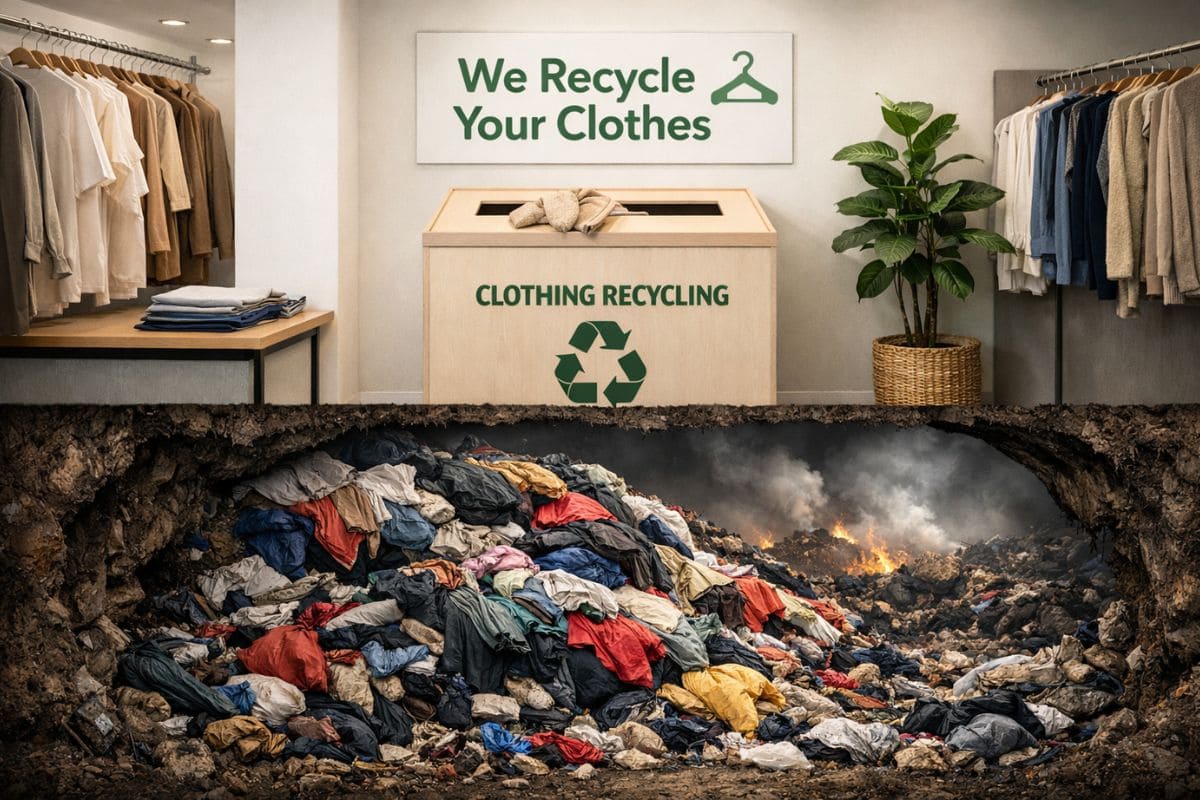
Perhaps the most heartbreaking aspect of fashion greenwashing is the myth of clothing recycling.
Brands love to put recycling bins in their stores. H&M does it. Zara does it. North Face does it. They encourage you to bring back your old, worn-out clothes. They tell you these clothes will be recycled into new garments. It feels like magic. It closes the loop. It makes you feel justified in buying new stuff because you’re “recycling” the old stuff.
Here is the dirty secret that the industry doesn’t want you to know: most of those clothes are not recycled into new clothing.
Globally, less than 1% of used clothing is actually recycled into new garments. Why? Because the technology is expensive and difficult. Most fast fashion is made from blended fabrics—a mix of cotton and polyester that is chemically bonded together. Separating those fibers to create new, high-quality yarn is currently three to five times more expensive than just making new polyester from petroleum.
So, where do your clothes go? They are often “downcycled” into lower-value products like insulation, cleaning rags, or stuffing for mattresses. Or, even worse, they are baled up and shipped to countries in the Global South.
By 2030, an estimated 148 million tons of textile waste will be dumped in landfills, a 60% increase from 2015. The Environmental Protection Agency estimates that 84% of clothes still end up in landfills or incinerators, even with take-back programs in place.
When a brand tells you their clothes are “recyclable,” they are engaging in classic fashion greenwashing. They are shifting the responsibility onto you while ignoring the fact that the system they profit from is fundamentally broken.
The Human Cost Hidden Behind the Green Label
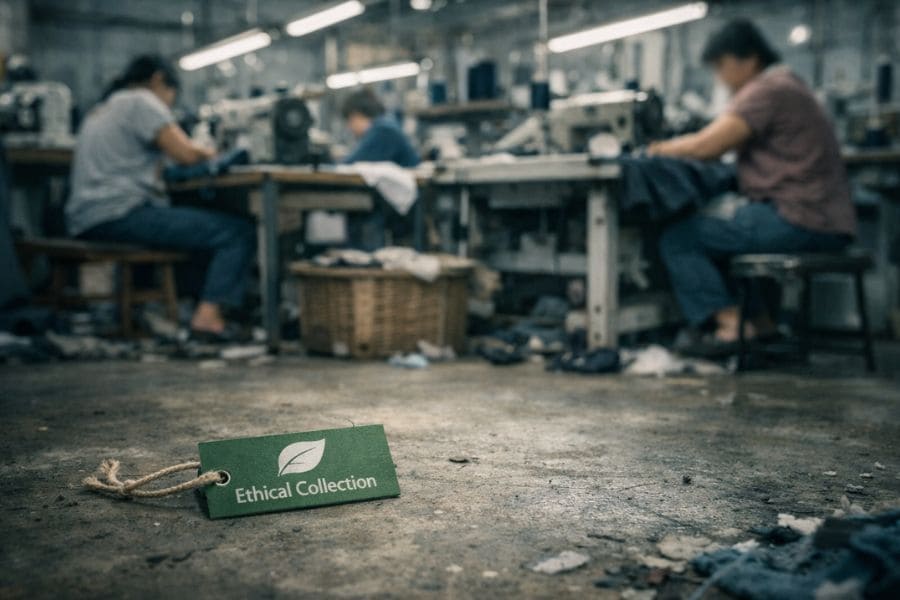
Fashion greenwashing isn’t just about the planet. It’s also about people. When a brand uses words like “ethical” or “conscious,” it implies that the humans making the clothes were treated with dignity and respect.
But the fashion supply chain is notoriously opaque. Brands often don’t own the factories; they contract work out to third-party suppliers. This allows them to claim plausible deniability when things go wrong.
In 2025, investigations in Prato, Italy, shattered the illusion of “Made in Italy” luxury. Prato is known for high-end fashion production. Yet, investigators found workshops where workers—many of them migrants—were laboring thirteen hours a day, seven days a week, for as little as three euros an hour. They worked in unsafe conditions, with no contracts and no rights. These workshops were producing for major fashion houses.
Similarly, Dior faced significant backlash when it sold a $200,000 coat embroidered with traditional Indian Mukaish work. The coat was marketed as a luxury masterpiece, celebrating craftsmanship. However, the Indian artisans who spent 34 days hand-stitching the embroidery were not credited, not named, and not fairly compensated for their cultural heritage.
Edelweiss CEO Radhika Gupta called out the brand publicly, stating: “12 Indian artisans. 34 days of work. No credit. No context. No mention of India. The world loves Indian craftsmanship — but rarely credits the craftspeople.”
When you see a green or ethical claim on a high-end product, ask yourself: Does this label cover the humans? Usually, it does not. That is fashion greenwashing hiding human exploitation behind a veneer of virtue.
Why We Keep Falling For It: The Attitude-Behavior Gap
You might be wondering, “If this is so obvious, why do smart people like me keep falling for it?”
It comes down to something psychologists call the “attitude-behavior gap.” Research from the University of Padova confirms that while consumers express concern for the environment, this often doesn’t translate into purchasing decisions due to factors like environmental skepticism and the complexity of verifying claims.
A Canadian study by Fashion Takes Action found that while 77% of consumers say they are concerned about the environment, most don’t feel equipped to identify which brands are actually sustainable. Trust is remarkably low—only 16% trust the brands themselves to be honest about their sustainability claims.
We want to believe the green label because it makes life easier. If the $20 dress is “eco-friendly,” we don’t have to change our shopping habits. We don’t have to save up for the more expensive, truly ethical brand. We don’t have to shop second-hand. We can have the fast fashion and the clean conscience simultaneously.
Brands exploit this gap ruthlessly. They know you want to feel good, so they give you a green sticker. They know you don’t have time to research the supply chain of a $15 t-shirt, so they give you a vague promise. They know you want to be a good person, so they sell you a story.
This psychological loophole is the fuel that powers the entire engine of fashion greenwashing.
How to Spot Fashion Greenwashing: A Practical Guide
So, how do you navigate this minefield? How do you buy clothes without being tricked? It requires shifting your mindset from passive consumer to active investigator. Here is how you spot fashion greenwashing in the wild.
1. Look for Specifics, Not Poetry
If a tag says “Love the Planet,” “For a Greener Future,” or “Mother Earth Approved,” be immediately suspicious. These are poetic phrases designed to make you feel warm and fuzzy. They contain zero data.
Instead, look for specifics. Does the tag tell you exactly what percentage of the garment is organic? Does it name the specific factory where it was made? Does it point you to a third-party certification?
2. Trust Third-Party Certifications
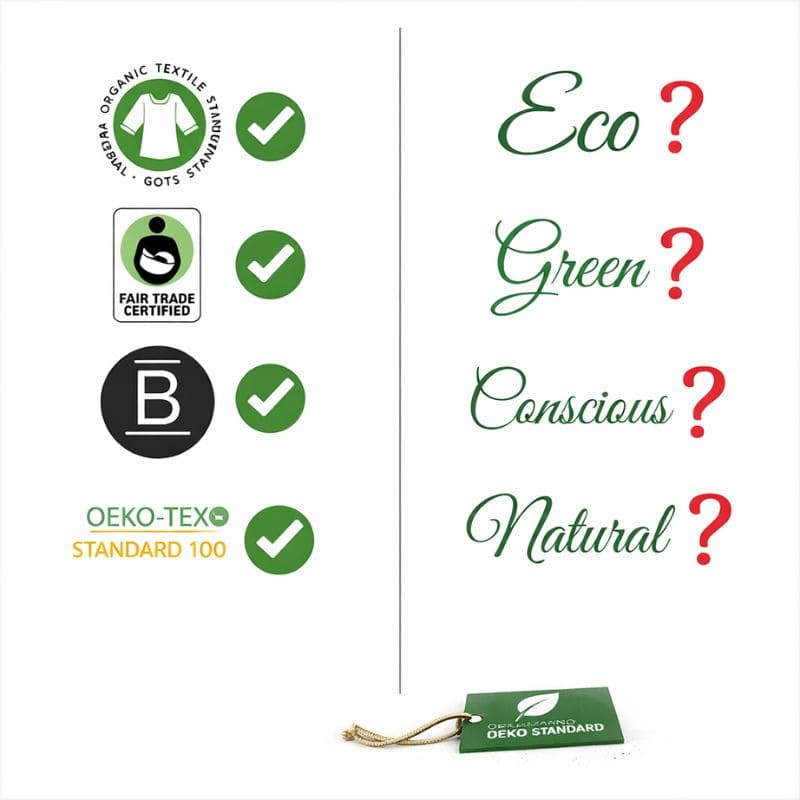
Don’t trust the brand. Trust independent auditors. Look for these labels:
- Global Organic Textile Standard (GOTS): This is the gold standard. It covers the entire supply chain, from the field where the cotton is grown to the factory where it’s sewn. It also includes strict social criteria for workers.
- Fair Trade Certified: This ensures the farmers and workers receive a fair wage and work in safe conditions.
- B Corp: This certifies that the entire company meets high standards of social and environmental performance, not just one product line.
- OEKO-TEX Standard 100: This ensures the product is free from harmful chemicals.
If a product lacks these labels but is full of green marketing language, you are likely looking at fashion greenwashing.
3. Check the Fabric Composition
Be honest with yourself about materials. If a garment is made mostly of polyester, nylon, or acrylic, it is plastic. It will shed microfibers. It will not biodegrade. No amount of green marketing changes that.
If you care about the planet, prioritize natural fibers like organic cotton, linen, hemp, and wool. Or, look for certified TENCEL Lyocell, which is made from wood pulp in a closed-loop process that recycles water and solvents.
4. Question the “Sustainable Collection”
Be deeply wary of specific “sustainable” collections within a larger, unsustainable brand. Ask yourself: if the brand can make sustainable clothes, why isn’t all their clothing sustainable?
Often, these collections are a tiny drop in a massive ocean of pollution. They exist to make you feel better about walking into the store, not to actually change the world.
5. Research the Parent Company
That cute sustainable brand you found on Instagram might actually be owned by a massive conglomerate that is destroying the planet. Many fast fashion giants have bought up smaller, ethical brands to give themselves “green credibility.” Do a quick Google search for “[Brand Name] parent company” before you buy.
The Brands Actually Doing the Work
It’s not all doom and gloom. While the giants are greenwashing, there are smaller, independent brands actually doing the work. These brands are usually transparent to a fault. They will tell you exactly where their clothes are made. They will tell you the name of the person who sewed it. They will explain why their prices are higher (because they pay fair wages and use quality materials).
Brands like Patagonia have long been the standard-bearer, famously telling customers “Don’t Buy This Jacket” to discourage overconsumption. Smaller brands like Eileen Fisher focus on timeless design and take-back programs that actually recycle the fibers. Pact focuses on fair trade organic cotton basics. Nudie Jeans offers free repairs on their jeans for life.
These brands aren’t perfect—no brand in a capitalist system can be perfectly sustainable—but they are transparent about their flaws and actively working to improve. They don’t hide behind vague marketing terms. They don’t need to rely on fashion greenwashing because they are actually doing the work.
For a curated list of transparent brands, read our guide on ethical fashion brands that pass the transparency test.
The Future: Regulation is Finally Coming in 2026
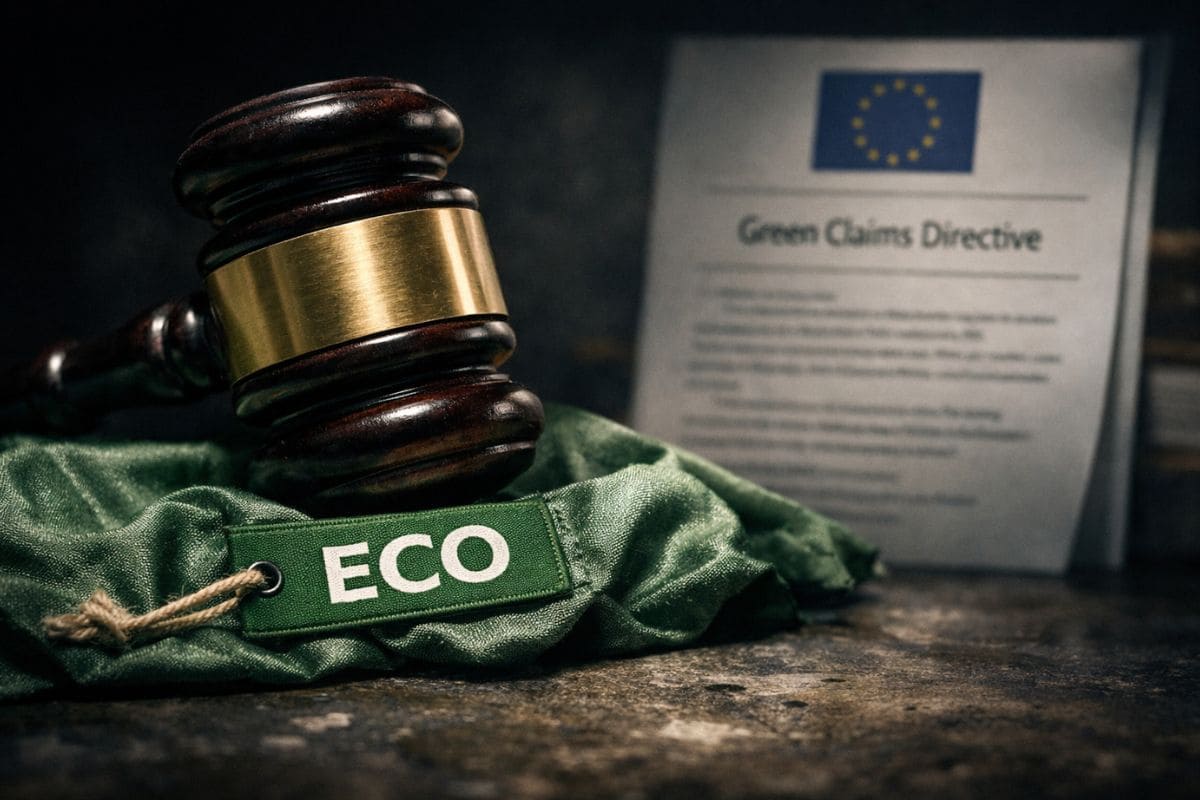
The good news is that regulators are finally catching up to the scale of the problem. The cases against Nike, Lacoste, and Superdry in the UK are just the beginning. The European Union is working on new, aggressive laws to ban greenwashing and force companies to prove their environmental claims.
The EU’s “Empowering Consumers Directive” is expected to apply from 2026, requiring that environmental claims be clear, specific, and substantiated. The upcoming Green Claims Directive will further tighten the screws, requiring companies to use third-party verification for any green marketing claims.
France has already introduced laws to ban the term “biodegradable” on plastic products and to force companies to display repair scores. The tide is turning.
In the near future, we may see a world where a brand can’t just slap a green leaf on a polyester shirt and call it a day. They will be required to provide a “digital product passport,” showing exactly where every fiber came from, how much carbon was emitted, and whether the workers were paid fairly.
Until that day comes, the responsibility falls on us. We have to be skeptical. We have to look past the green tags and ask the hard questions. We have to stop rewarding fashion greenwashing with our money.
Conclusion: Stop Buying the Lie
The fashion industry is not your friend. It is a machine designed to extract money from your pocket by any means necessary. If pretending to be “green” is what it takes to get you to buy, they will do it without hesitation, without remorse, and without actually changing anything.
These eco-friendly fashion claims are misleading. They are designed to make you feel less guilty about participating in a system that is trashing the planet and exploiting workers. The sooner we accept that there is no “ethical” way to buy fifty new items a year, the sooner we can break free from the cycle.
Buy less. Choose well. Make it last. Research the brands you love. Demand transparency. And when you do buy, ignore the marketing poetry and look for the facts.
Because until we stop falling for fashion greenwashing, the industry has no reason to stop lying to us.
FAQ
Q: What is fashion greenwashing in simple terms?
A: Fashion greenwashing is when a brand spends more money and energy marketing itself as “eco-friendly” than it does actually minimizing its environmental impact. It is a deceptive marketing tactic used to trick consumers into believing a company is doing more for the planet than it really is.
Q: How can I tell if a brand is truly sustainable or just greenwashing?
A: Look for radical transparency. A truly sustainable brand will openly share information about its supply chain, factory locations, material sourcing, and worker wages. If a brand uses vague terms like “green” or “conscious” without third-party certifications (like GOTS or Fair Trade), it is likely fashion greenwashing.
Q: Is recycled polyester actually sustainable?
A: It’s complicated. Recycled polyester is better than virgin polyester because it keeps plastic out of landfills and uses less energy to produce. However, it is still plastic. Every time you wash it, it sheds microplastics that end up in the ocean. It is a step in the right direction, but it is not a perfect solution, and brands often overstate its benefits.
Q: Why did Nike and Adidas get in trouble for their green claims?
A: In late 2025, Nike had ads banned in the UK for misleading consumers about their “sustainable materials.” Adidas also faced legal challenges regarding claims about being “climate neutral.” Regulators ruled that their absolute claims of sustainability were not backed by evidence covering the full lifecycle of their products, which is a classic example of fashion greenwashing.
Q: Are in-store clothing recycling programs just a gimmick?
A: Often, yes. While some brands are genuinely working on textile-to-textile recycling technology, most in-store collection bins send the clothes to be downcycled (turned into insulation or rags) or shipped overseas. Currently, less than 1% of clothing is actually recycled into new garments due to technological and cost barriers.
Q: What are the worst greenwashing words to look out for?
A: Be highly skeptical of these terms if they aren’t backed by hard data and certifications: “Eco-Friendly,” “Green,” “Conscious,” “Sustainable,” “Made with Recycled Materials” (without a specific percentage), “Carbon Neutral,” and “Natural.” These words sound good but are often meaningless without proof.