
You’ve seen the phrase everywhere. On clothing tags, in Instagram captions, on brand homepages. But let’s be real: what does sustainable fashion mean in a way that actually matters to your daily life?
It’s not a buzzword. It’s not a marketing badge. And it’s certainly not about owning a hemp tote bag and feeling guilty about everything else.
So, what does sustainable fashion mean at its core? It means making clothes – and choosing clothes – in a way that doesn’t trash the planet, doesn’t exploit people, and doesn’t fall apart after three washes. It’s about slowing down, buying better, and valuing what you already own.
Let’s unpack that together. No jargon. No perfectionism. Just the real story.
So, What Does Sustainable Fashion Mean in Plain English?
If you had to explain it over coffee, you’d say:
Sustainable fashion is clothing that’s good for the Earth, fair to the people who make it, and built to last longer than a single season.
That’s it. Three simple ideas.
Fast fashion flips all three. It’s cheap, rushed, and disposable. What does sustainable fashion mean instead? It asks different questions:
- Where did this cotton come from?
- Who stitched this seam?
- What happens when I’m done with it?
Once you start asking those questions, you stop seeing clothes as “cute tops” and start seeing them as choices with consequences. That sounds heavy, but it’s actually freeing. You stop chasing trends. You start building a wardrobe that feels like you.
The Three Pillars: Planet, People, Product
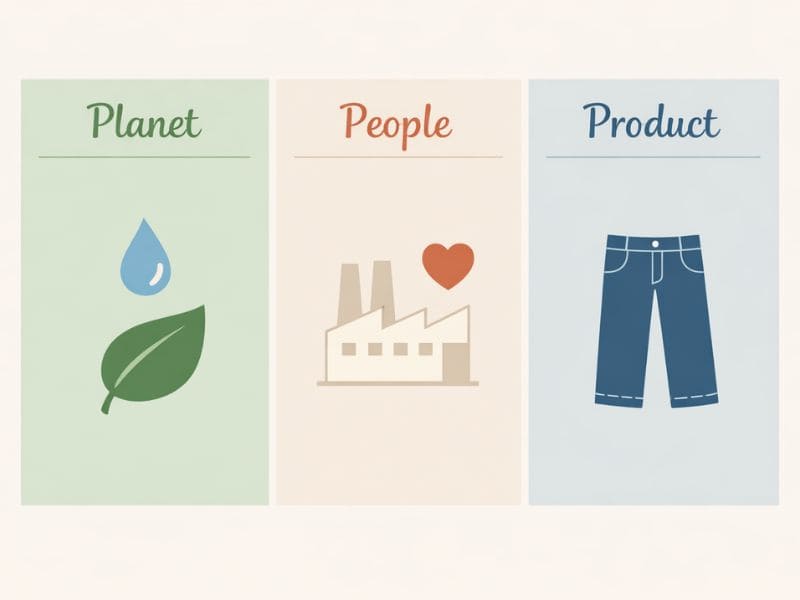
To really get what does sustainable fashion mean, you need to look at the three legs holding it up. If one is weak, the whole thing wobbles.
1. Environmental Responsibility (Planet)
The fashion industry is messy. It drinks up insane amounts of water, pumps out carbon, and leaks toxic dyes into rivers. What does sustainable fashion mean for the planet? It means cleaning that up by:
- Using less water (think organic cotton or hemp)
- Cutting carbon emissions (local production, renewable energy)
- Avoiding nasty chemicals (no formaldehyde or lead)
- Keeping clothes out of landfills (repair, reuse, recycle)
For example, making one conventional cotton t‑shirt uses about 2,700 litres of water – that’s nearly three years of drinking water for one person. Organic cotton slashes that dramatically.
2. Ethical Labor (People)
Here’s the part we don’t like to talk about. Many cheap clothes are sewn by people working 14‑hour days for poverty wages, in unsafe buildings. What does sustainable fashion mean for workers? It means fairness.
It means:
- Fair wages, not just “legal minimum”
- Safe, ventilated factories
- No child or forced labour
- Freedom to unionise
Certifications like Fair Trade or B Corp aren’t perfect, but they’re a solid start. Brands that hide their supply chain? That’s a red flag.
3. Durability & Longevity (Product)
A sustainable shirt isn’t sustainable if it disintegrates in six months. Real sustainability means clothes that last. What does sustainable fashion mean for your wardrobe? It means investing in:
- Stronger stitching (double‑stitched seams)
- Better fabrics (longer fibres, natural blends)
- Timeless cuts (not every micro‑trend)
Think of it this way: a £100 jacket you wear for five years is cheaper – and greener – than five £20 jackets that each last one year.
What Does Sustainable Fashion Mean in Real Life? (Four Examples)
Theory is fine. But you want to know how this actually shows up. Here are four real‑world faces of sustainable fashion.
Ethical & Fair Trade Fashion
This is the “people first” side. Brands map their entire supply chain and pay fairly. What does sustainable fashion mean here? It means transparency. Look for websites that name their factories. Example: People Tree or Patagonia’s “Footprint Chronicles.”
How you apply it:
- Search for “Fair Trade certified” clothing
- Avoid brands that won’t say where their clothes are made
Slow Fashion
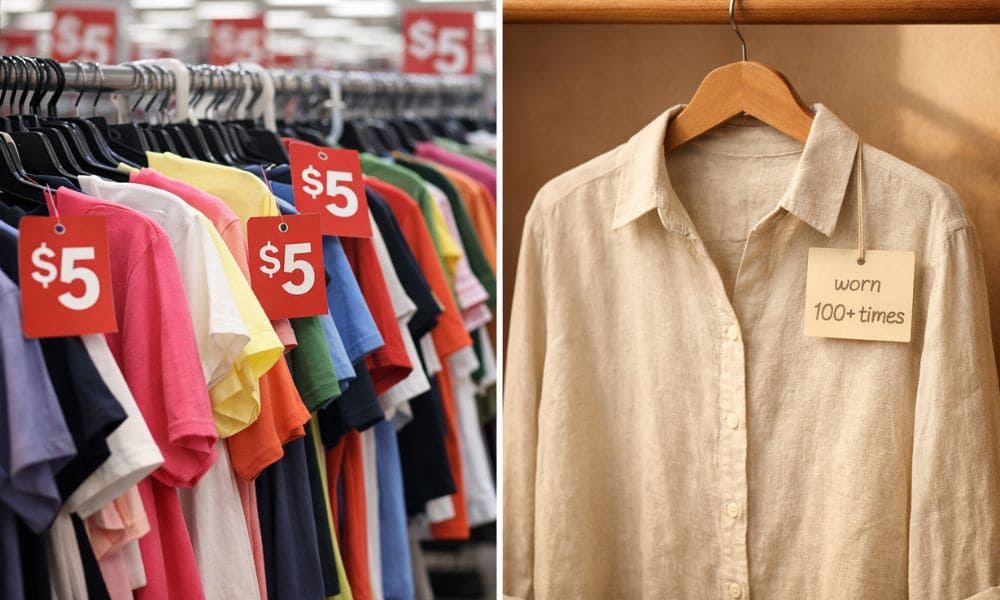
The opposite of “drop every week.” Slow fashion means small collections, classic styles, and fewer releases. What does sustainable fashion mean in slow fashion? It means buying less and cherishing more.
How you apply it:
- Ask: “Will I wear this in three years?”
- Ignore TikTok trends that vanish in six weeks
Circular Fashion
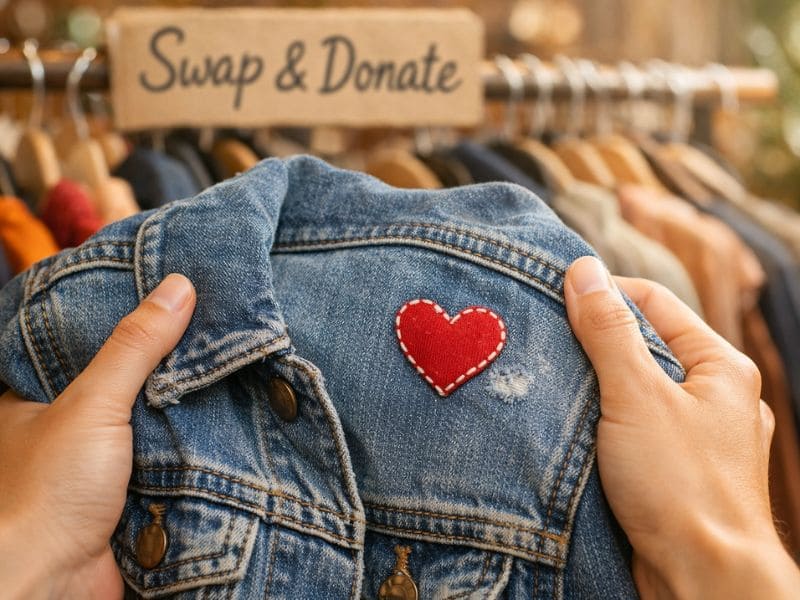
This is about keeping clothes in use, not in the bin. Circular fashion includes renting, swapping, repairing, and recycling. What does sustainable fashion mean in a circular system? It means nothing truly becomes waste.
How you apply it:
- Learn basic mending (a needle and thread is magic)
- Sell or donate – never trash – wearable clothes
- Try upcycling: turn old jeans into a bag
Eco‑Friendly Materials
Not all fabrics are equal. Some are thirsty, some shed plastic, some biodegrade happily.
Better choices:
- Organic cotton (less water, no pesticides)
- Hemp (grows fast, improves soil)
- Linen (durable, gets softer with age)
- Recycled polyester (keeps plastic out of oceans)
Worse choices:
- Conventional cotton (pesticide‑heavy)
- Virgin polyester (plastic from fossil fuels)
- Rayon/viscose (often from old‑growth forests)
Brands like Girlfriend Collective or Outerknown are great examples of material transparency.
Why Should You Care? The Numbers Don’t Lie
You might think “I’m just one person – does it matter?” Yes. Because your money votes every single day. And understanding what does sustainable fashion mean helps you vote smarter.
The global fashion industry is responsible for:
- 8–10% of annual carbon emissions (more than flights and shipping combined)
- 20% of industrial water pollution (from dyeing and finishing)
- 92 million tonnes of textile waste per year – a truckload of clothes dumped or burned every second
And on the human side: the Rana Plaza factory collapse in 2013 killed over 1,100 garment workers. That tragedy woke many of us up. But change has been slow.
When you understand what does sustainable fashion mean, you realise your choice to buy one £60 shirt from a transparent brand instead of three £20 mystery shirts sends a signal. Brands follow the money.
What Does Sustainable Fashion Mean for You, the Shopper?
Here’s the good news: you don’t have to be a perfect eco‑angel. You just have to be more conscious.
Simple, Non‑Preachy Ways to Start
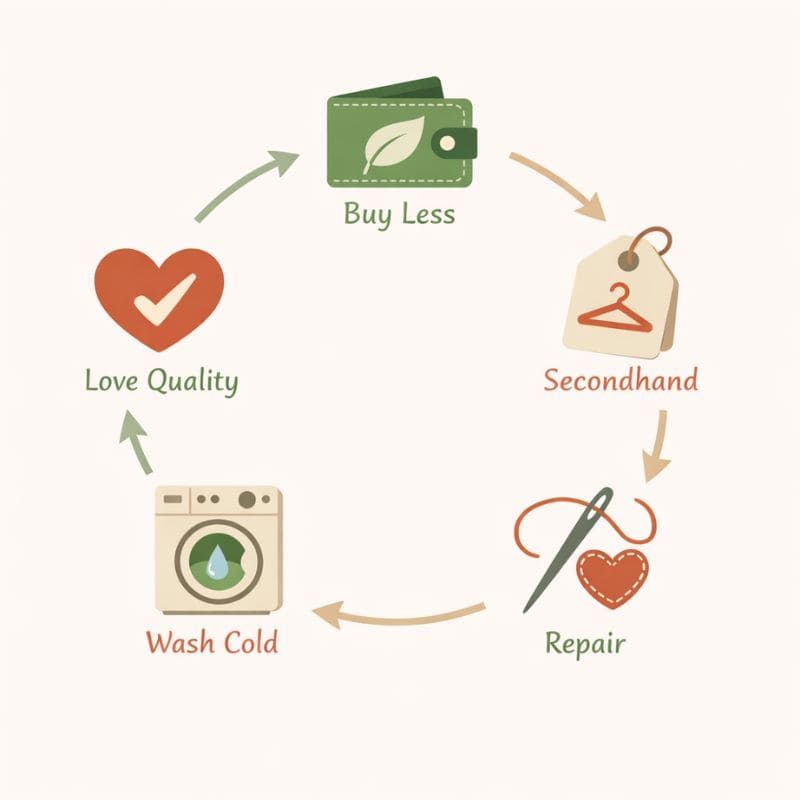
- Buy less, choose better – One great jacket beats five mediocre ones.
- Shop secondhand first – Vinted, Depop, Oxfam, flea markets. The most sustainable garment is the one already made.
- Check the label – Look for GOTS (Global Organic Textile Standard), Fair Trade, or B Corp
- Wash with care – Cold water, air dry, use a microplastic filter bag for synthetics.
- Repair, don’t despair – Loose button? Small tear? Five minutes with a needle saves it.
Start with one habit. Maybe it’s no more “impulse Prime purchases.” Maybe it’s mending one sock. That’s real progress. That’s what does sustainable fashion mean in action.
Three Myths That Need to Die
Myth 1: “Sustainable fashion is only for rich people”
Reality: Buying fewer, higher‑quality items saves money over time. Also, secondhand is cheap. And borrowing or swapping costs nothing. You don’t need a £300 organic cashmere sweater. You need to stop buying £10 polyester tops that fall apart.
Myth 2: “It’s just about using organic cotton”
Reality: Materials matter, but so do wages, factory conditions, packaging, shipping, and how long you wear the item. A “organic cotton” shirt made in a sweatshop isn’t sustainable. That’s not what does sustainable fashion mean at all.
Myth 3: “One person can’t make a difference”
Reality: Consumer demand is why we have recycled polyester, rental fashion, and supply chain laws in Europe. Every ethical purchase is a vote. Every conversation with a friend spreads the idea.
If you’re new to all this, start small. Maybe you’re not ready to overhaul your entire closet overnight—and that’s fine. The most practical first step is learning how to spot greenwashing, which we break down in our guide to identifying fake eco-claims. Once you know the tricks brands use, understanding what does sustainable fashion mean becomes a whole lot easier.
Benefits (Because Good Choices Feel Good)
When you embrace what does sustainable fashion mean, you get more than a clean conscience.
For the planet:
- Less pollution, less waste, less water wasted
- Fewer clothes ending up in African landfills or Chilean deserts
For workers:
- Fair wages and safer factories
- Dignity instead of exploitation
For you:
- A wardrobe you actually love, not just tolerate
- More money in your pocket long‑term
- Less decision fatigue – you know your style
And honestly? There’s a quiet pride in wearing a jacket you repaired yourself, or a dress you found at a charity shop for £8 that fits perfectly.
The Future of Fashion (It’s Getting Better)
We’re not there yet, but change is happening faster than you think. And what does sustainable fashion mean is evolving too.
Innovations on the horizon:
- Lab‑grown leather (no cows, no plastic)
- Mushroom leather (Mylo) and pineapple fibres (Piñatex)
- Biodegradable sequins and dyes
- Fibre‑to‑fibre recycling (old jeans become new jeans)
Policy shifts:
- France’s anti‑waste law bans destroying unsold goods
- EU digital product passports will show exactly how a garment was made
- More countries are considering “right to repair” for clothing
The more people ask what does sustainable fashion mean, the faster these changes come.
FAQ – Your Burning Questions, Answered
Q: Is sustainable fashion really better for the environment, or is it just greenwashing?
A: Some brands do greenwash. But genuine sustainable fashion – less production, better materials, longer use – is undeniably better. What does sustainable fashion mean in this context? It means prioritising existing clothes first. The greenest garment is the one that already exists. Secondhand beats everything. New “sustainable” items are still better than fast fashion, but buying less is the real win.
Q: I’m on a tight budget. How can I afford sustainable fashion?
A: You don’t have to buy new “sustainable” brands. Thrift stores, clothing swaps, and repair are low‑cost or free. Also, saving up for one durable item often costs less over five years than five cheap replacements. Start with what you have – wear it out, mend it, then pass it on. That’s exactly what does sustainable fashion mean on a budget.
Q: What certifications should I look for?
A: The most reliable: GOTS (organic textiles), Fair Trade (worker welfare), B Corp (overall social/environmental performance), OEKO‑TEX (no harmful chemicals). No single label covers everything, so a brand that openly shares factory names is often better than a logo.
Q: How do I know if a brand is truly sustainable or just marketing?
A: Look for transparency. Do they name their factories? Publish sustainability reports? Have third‑party audits? Be suspicious of vague claims like “eco‑friendly” without data. And remember: no brand is 100% perfect. You’re looking for honest effort, not sainthood.
Q: Can fashion ever be fully sustainable?
A: Probably not 100%, because every garment uses resources. But we can get very close. The goal is to operate within planetary boundaries – renewable energy, closed‑loop water, fair wages, and no waste. That’s the north star. What does sustainable fashion mean as a goal? It means constantly improving, not being perfect.
Q: What’s the single most impactful thing I can do?
A: Wear your clothes longer. Doubling the life of a garment from one year to two cuts its carbon footprint by 24%. That’s bigger than buying organic or recycled. So: repair, rewear, and resist the urge to “refresh” your wardrobe every season.
Final Thoughts: It’s Not About Perfection
So, after all this – what does sustainable fashion mean to you?
It doesn’t have to mean a minimalist wardrobe of beige linen and hand‑stitched sandals. It doesn’t mean throwing away all your fast fashion in guilt.
It means starting where you are.
Wearing that old sweater one more winter.
Patching your favourite jeans.
Asking one question before you click “buy”: Do I really need this, and will it last?
That’s not hard. That’s just being a thoughtful human.
And when millions of us do those small things, the industry has no choice but to change. You’re not just buying clothes. You’re casting a vote for the world you want to live in.
So go ahead. Wear it well. Wear it longer. And don’t let anyone tell you that one person can’t make a difference.
Want to go deeper? Check out Fair Trade International or the Global Organic Textile Standard (GOTS).