
Beginner’s Guide to Sustainable Fabrics on a Budget
Introduction
Ever looked at the price tag of a beautiful, eco-friendly garment and felt your heart sink? You’re not alone. The desire to make more sustainable fashion choices is growing, but the perception that it’s a luxury only a few can afford is a huge barrier. What if you could build a conscious wardrobe without breaking the bank?
The good news is that sustainable fashion is not synonymous with expensive. It’s about making smarter choices, understanding the impact of our purchases, and knowing which budget-friendly sustainable fabric options deliver the most value for both your wallet and the planet. This guide is your roadmap to navigating the world of budget-friendly sustainable fabric, proving that you don’t need a huge budget to make a positive impact. This guide is designed to demystify sustainable fabrics and show you how to embrace them on a budget.
What Are Sustainable Fabrics?
At its core, a sustainable fabric is one that is produced in the most environmentally and socially responsible way possible. This isn’t about a single factor, but a whole lifecycle approach.
Sustainable fabrics are typically derived from natural, eco-friendly sources like sustainably grown crops or recycled materials. Their sustainability is often measured by the resources required for production—including water, energy, and chemicals—as well as their biodegradability at the end of their life. Think of them as an antidote to the damaging effects of fast fashion, resulting in garments that are responsible from the field to your closet and beyond.
The fashion industry is one of the largest polluters globally, and the fast-fashion model thrives on producing cheap, low-quality virgin materials that make up a significant portion of municipal waste. By choosing sustainable fabrics, we can collectively reduce this immense burden.
What to Look For: Certifications and Labels

When you’re shopping, how can you tell if a fabric is truly sustainable? Look for these trustworthy labels that help cut through the greenwashing:
- Global Organic Textile Standard (GOTS): The gold standard for organic textiles, ensuring environmental and social criteria are met from harvesting to labeling.
- OEKO-TEX Standard 100: Certifies that every component of a textile, from thread to button, has been tested for harmful substances.
- Fair Trade: Guarantees that fair wages and safe working conditions are provided to the people who make the clothes.
- Bluesign®: A certification that focuses on environmental standards and safety throughout the entire supply chain.
Top Affordable Sustainable Fabrics to Know

You don’t need to invest in exotic, expensive materials to make a difference. Some of the most sustainable and affordable fabrics have been around for centuries. Here are the top three budget-friendly champions you should know.
1. Organic Cotton
While conventional cotton has a notorious reputation for being a “thirsty crop” that uses heavy pesticides, organic cotton is a different story. It’s grown without toxic synthetic pesticides, fertilizers, or genetically modified seeds (GMOs).
Why it’s a budget-friendly choice: Organic cotton is widely available and often comparable in price to mid-range conventional cotton, especially for basics like t-shirts and underwear. Its durability also means you get more wear for your money.
2. Hemp
Hemp fabric comes from the stalks of the Cannabis sativa plant and is one of the most durable and eco-friendly fibers available. It’s important to note that industrial hemp contains negligible amounts of THC and is a different plant from marijuana.
Why it’s a budget-friendly choice: Although the initial cost can be higher, hemp’s extreme longevity makes it a fantastic investment. A hemp garment can last for years, even decades, outliving countless cheaper, fast-fashion items.
3. Bamboo
Bamboo fabric is made from the pulp of the bamboo grass, an incredibly fast-growing and regenerative crop that requires no fertilizer and very little water to thrive.
Why it’s a budget-friendly choice: The efficiency of bamboo cultivation often translates to affordable end products, particularly for everyday items like socks, underwear, and t-shirts.
Comparison of Top Affordable Sustainable Fabrics
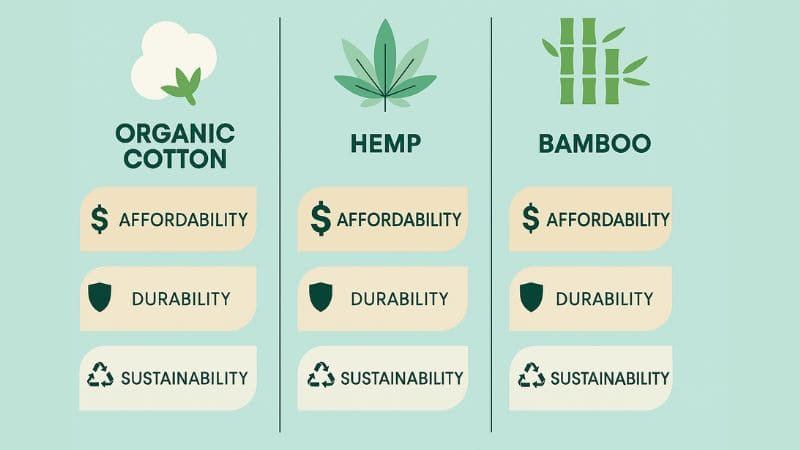
| Fabric | Key Affordable Feature | Best For | A Note on Sustainability |
| Organic Cotton | Widely available & durable; cost-effective for basics. | Everyday wear, t-shirts, bedding, denim. | Look for GOTS certification to ensure it’s truly organic. |
| Hemp | Extreme durability & longevity: an investment that pays off. | Durable clothing, bags, denim, and warm-weather apparel. | Becomes softer with every wash. Look for organic certifications. |
| Bamboo | Efficient growth keeps costs down for certain items. | Socks, underwear, soft loungewear, and activewear. | Look for transparent brands using closed-loop processing to mitigate chemical use. |
Deep Dive: Benefits of Organic Cotton, Hemp, and Bamboo
The Pros and Cons of Organic Cotton

Benefits:
- Better for Farmers & the Environment: Growing organic cotton eliminates the health risks associated with toxic pesticides for farmers and reduces water pollution.
- Hypoallergenic & Safe for Skin: With no harsh chemical residues, organic cotton is ideal for those with sensitive skin or allergies.
- Durable & Long-Lasting: The absence of harsh chemicals in processing means the fibers stay stronger for longer, so your clothes don’t wear out as quickly.
Drawbacks to Consider:
- Lower Yield: Organic cotton typically produces a lower yield than conventional cotton, meaning it requires more land to grow the same amount, which can contribute to a higher environmental footprint in that regard.
- Higher Price Point: The more labor-intensive and costly process of growing cotton organically is often reflected in the final price.
The Pros and Cons of Hemp Fabric
Benefits:
- Low Environmental Impact: Hemp requires very little water, no pesticides, and it actually enriches the soil it grows in, making it a regenerative crop. It’s also a carbon-negative material, absorbing more CO2 than it produces.
- Extremely Durable & Long-Lasting: Hemp is one of the strongest natural fibers, making it incredibly resistant to wear and tear. Your hemp clothing will last for years.
- Breathable & Antimicrobial: The structure of hemp fiber makes it highly breathable and naturally resistant to mold, mildew, and bacteria, which helps prevent odors.
Drawbacks to Consider:
- Can Be Rough Initially: Pure hemp fabric can have a texture similar to linen and might feel stiff at first, though it softens significantly with every wash.
- Energy-Intensive Processing: The process of turning tough hemp stalks into soft, wearable fabric can be energy-intensive, which is a downside in its manufacturing phase.
The Pros and Cons of Bamboo Fabric
Benefits:
- Buttery Soft & Comfortable: Bamboo fibers are long and can be woven into a luxuriously soft, silky fabric that feels gentle against the skin.
- Highly Breathable & Moisture-Wicking: The microscopic holes in bamboo fibers make them exceptionally breathable and great at pulling moisture away from your skin, keeping you cool and dry.
- Naturally Antimicrobial & UV Protective: Bamboo has innate properties that help resist odor-causing bacteria and can provide a UPF rating of up to 50, protecting your skin from the sun.
Drawbacks to Consider:
- Chemical-Intensive Processing: To become a soft fabric, bamboo is often processed using a chemical-intensive method similar to viscose/rayon. It’s crucial to look for brands that use a “closed-loop” system that recycles these chemicals.
- Potential for Greenwashing: Because of the processing issue, not all bamboo fabric is created equal. The onus is on the consumer to find transparent brands.
How to Choose Sustainable Fabrics on a Budget
Building a sustainable wardrobe on a budget is a marathon, not a sprint. It’s about shifting your mindset from quantity to quality.
Prioritize Longevity Over Trends
The most sustainable garment is the one you already own. When you buy, think about whether you’ll want to wear it for the next five years. Choose classic styles and durable fabrics like hemp or organic cotton that are made to last. As one expert notes, “Sustainability is not a product… It’s a holistic shift to living in harmony with our environment, which means not taking more than we need”.
Embrace Secondhand and Thrifting
“Shopping secondhand is the ultimate way to be sustainable on a budget. You’re giving a garment a new life, saving it from a landfill, and avoiding the environmental cost of new production. Thrifting is also a great way to find high-quality, natural fiber clothing at a fraction of the original cost. To master the art of thrift shopping, check out our guide to thrifting for sustainable fashion, where we share 10 proven hacks for finding hidden gems.”
Care for Your Clothes to Make Them Last
How you care for your clothes drastically extends their lifespan. Wash them less frequently, use cold water, and air-dry instead of using a dryer. This not only saves energy but is also gentler on the fibers, preventing them from breaking down quickly. For odor-resistant fabrics like bamboo and hemp, you can often just air them out between wears, reducing washing even further.
Look for Blends and Sales
Don’t shy away from blends! A hemp-organic cotton blend, for example, offers the durability of hemp with the softness of cotton, often at a more accessible price point than 100% hemp. Also, keep an eye on end-of-season sales from your favorite sustainable brands.
Conclusion
Building a wardrobe with budget-friendly sustainable fabric is a journey of mindful choices. It’s not about perfection, but about progress. By understanding the real benefits of fabrics like organic cotton, hemp, and bamboo, and learning how to shop for them wisely, you can absolutely align your fashion choices with your values without overspending.
Start small. Next time you need a basic t-shirt, seek out an organic cotton one. If you need a durable summer shirt, consider hemp. Every conscious purchase is a vote for a healthier planet and a more ethical fashion industry. What will your first sustainable fabric swap be? more about sustainable fabrics
FAQ
Is organic cotton really better than regular cotton?
Yes, in key environmental and social ways. Organic cotton is grown without toxic pesticides and synthetic fertilizers, which protects farmers’ health, preserves biodiversity, and prevents chemicals from polluting water sources. However, it does typically have a lower yield, meaning it requires more land and can be more expensive.
Why is hemp fabric so sustainable?
Hemp is a sustainability powerhouse for several reasons: it requires very little water, no pesticides, and it actually improves soil health as it grows. It’s also a high-yield crop that produces more fiber per acre than cotton and is fully biodegradable at the end of its life.
Is bamboo fabric eco-friendly?
It can be, but it depends heavily on the manufacturing process. Bamboo as a plant is incredibly sustainable—it grows quickly with no need for fertilizer. However, turning it into a soft fabric often involves intensive chemical processing. To ensure it’s eco-friendly, look for brands that are transparent and use a closed-loop system to recycle water and chemicals.
How can I afford sustainable fashion on a tight budget?
The most affordable sustainable strategies are to buy less overall and to shop secondhand. Focus on buying quality, versatile pieces that you love and will wear for years. Caring for your clothes properly to extend their life is another key way to save money and reduce waste.
What are some certifications I should look for?
Trustworthy certifications include:
- GOTS (Global Organic Textile Standard) for organic fibers.
- OEKO-TEX Standard 100 for harmful substance testing.
- Fair Trade for ethical labor practices.
- Bluesign® for environmental safety in the supply chain.